

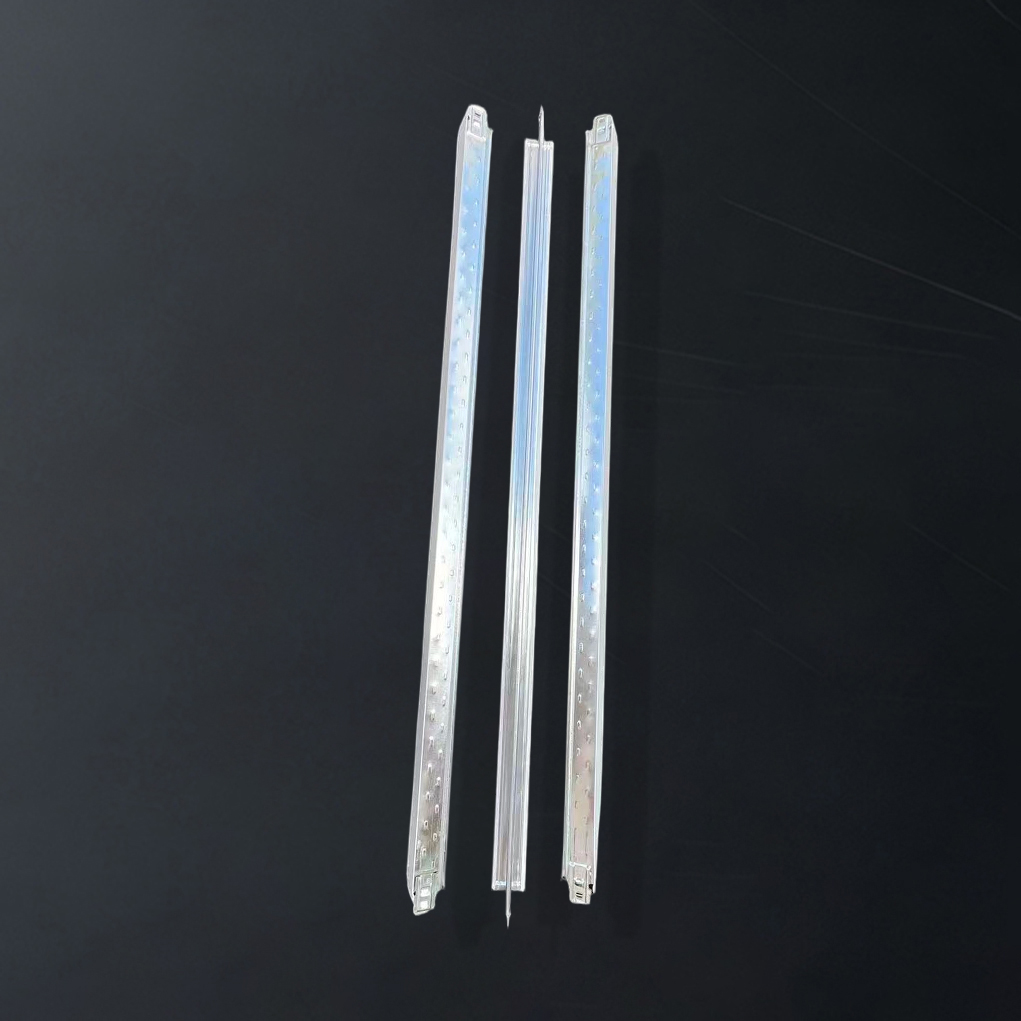
A galvanized ceiling grid is widely used in commercial, residential, institutional, and industrial
interior projects because it offers strong support, reliable performance, and long-term durability. In hot climate
areas, where high temperatures, humidity, and frequent condensation can affect building materials, a
galvanized Ceiling Grid System provides clear advantages. Its corrosion resistance, structural
stability, and low maintenance requirements make it a practical solution for ceilings exposed to heat and moisture.
This article explains why galvanized ceiling grid is suitable for hot climate areas, how it works,
what makes it different from other ceiling framing systems, and what specifications buyers, contractors, and project
planners should understand before choosing a Ceiling Suspension System. The content below is general industry
information only and does not recommend any specific brand or company.
A galvanized ceiling grid is a Suspended Ceiling Framework made from steel components that have
been coated with zinc to improve corrosion resistance. The grid supports ceiling tiles, acoustic panels, gypsum
boards, or other ceiling materials. It typically includes Main Runners, Cross Tees, Wall Angles, hangers, and
accessories. The galvanized coating acts as a protective barrier against rust and environmental damage.
In simple terms, a galvanized ceiling grid is a ceiling support system designed to stay strong and stable in
challenging environments. Because it uses galvanized steel, it performs better than untreated metal in locations
where humidity, heat, and airflow conditions may accelerate deterioration.
Hot climate regions present a unique set of building performance challenges. High temperatures can cause material
expansion, thermal movement, and faster aging of construction components. In many hot areas, heat is also combined
with high humidity, heavy rainfall, coastal salt exposure, or strong indoor air-conditioning cycles. These
conditions can affect metal ceilings and framing systems in several ways.
Because of these factors, choosing the right ceiling support structure is critical. A galvanized ceiling grid
is often preferred because it is engineered to handle environmental stress better than non-protected steel or
low-grade metal alternatives.
One of the biggest advantages of a galvanized ceiling grid is its resistance to corrosion. The zinc
coating shields the steel from moisture and oxygen, which are the primary causes of rust. In hot climate areas,
humidity is often high, and even indoor spaces can experience condensation. Galvanized steel is far better equipped
to resist these conditions than untreated steel.
This corrosion resistance is especially valuable in:
In hot climates, ceiling systems are exposed to ongoing thermal stress. A galvanized ceiling grid maintains its
strength and shape over time, reducing the risk of sagging, distortion, or joint failure. Because the underlying
steel is protected, the grid can support ceiling materials consistently for a longer period.
This stability is important for ensuring that ceiling tiles remain aligned, suspension points stay secure, and the
overall ceiling appearance remains clean and professional. For large commercial projects, structural stability is a
key reason why galvanized ceiling grid systems are widely specified.
Many hot climate buildings rely heavily on air-conditioning. This creates a strong temperature difference between the
ceiling cavity and the occupied space. Such differences can lead to condensation if the system is not properly
protected. A galvanized ceiling grid is a suitable choice because it can withstand these conditions better than
uncoated steel systems.
The zinc layer helps protect the grid from moisture generated by cooling equipment, ventilation systems, or
temperature swings. As a result, the ceiling system remains safer and more reliable in modern HVAC-driven buildings.
Buildings in hot climates often require materials that reduce maintenance frequency. A galvanized ceiling grid
is a low-maintenance solution because it does not rust easily and does not need frequent protective treatment. This
helps reduce long-term operational costs, especially in large buildings such as offices, schools, hospitals, hotels,
airports, and shopping centers.
Lower maintenance means:
Hot climate areas are often found near coastlines or in tropical zones where moisture and salts are part of the
environment. Salt in the air can quickly damage unprotected metal. Galvanized steel offers better resistance to these
aggressive conditions, making it a practical choice for interior ceiling framing.
When properly installed and combined with suitable ceiling panels and accessories, a galvanized ceiling grid can
deliver reliable performance even in demanding environments where ordinary metal components may fail sooner.
| Advantage | Why It Matters in Hot Climate Areas | Practical Benefit |
|---|---|---|
| Corrosion resistance | Protects against humidity, condensation, and moisture exposure | Longer service life and fewer rust problems |
| Thermal stability | Handles temperature changes and heat stress better | Less distortion and better ceiling alignment |
| Durability | Supports long-term use in demanding climates | Reduced replacement and maintenance costs |
| Lightweight design | Helps simplify installation and reduce structural load | Faster project execution |
| Compatibility | Works with many ceiling tile and panel types | Flexible design options for different interiors |
| Cost efficiency | Lower lifecycle cost in warm and humid environments | Better long-term value |
The main protection in a galvanized ceiling grid comes from the zinc coating. Zinc acts as both a physical barrier
and a sacrificial layer. As a barrier, it limits contact between the steel and moisture. As a sacrificial layer, it
helps protect the steel even if the surface is scratched or slightly damaged.
This dual protection is especially useful in hot climate areas where ceilings may face:
The thicker and more consistent the galvanized layer, the stronger the corrosion protection generally becomes.
However, project requirements vary, and specification should always match environmental exposure, ceiling type, and
local standards.
A galvanized ceiling grid is used in a wide range of buildings where heat resistance and corrosion control are
important. Common applications include:
In all of these settings, the main value is the same: a galvanized ceiling grid helps maintain ceiling performance
despite environmental pressure from heat and moisture.
When comparing ceiling framing systems, the difference between galvanized and non-galvanized materials is important.
Non-galvanized steel may be less expensive at first, but it can be more vulnerable to rust and deterioration in hot
climates. Over time, this can lead to higher maintenance and replacement costs.
| Feature | Galvanized Ceiling Grid | Non-Galvanized Metal Grid |
|---|---|---|
| Corrosion resistance | High | Low to moderate |
| Performance in humidity | Better suited | More vulnerable |
| Life expectancy | Longer | Shorter in harsh climates |
| Maintenance demand | Lower | Higher |
| Suitability for hot climates | Strong choice | Less ideal |
| Lifecycle value | High | Often lower due to repairs |
In hot and humid regions, the initial savings of an untreated system may disappear quickly if corrosion,
replacement, or reinstallation becomes necessary. This is why galvanized ceiling grid systems are commonly chosen
for projects where durability matters.
A complete ceiling grid system usually includes several coordinated components. Each part contributes to the overall
load support, alignment, and finishing quality of the ceiling assembly.
| Component | Function | Importance in Hot Climates |
|---|---|---|
| Main runner | Primary structural support for the grid | Must remain straight and corrosion-resistant |
| Cross tee | Creates the module spacing for ceiling panels | Needs stable fit and dimensional accuracy |
| Wall angle | Supports the perimeter edge of the ceiling | Helps preserve clean edges in varying temperatures |
| Hanger wire or rod | Suspends the grid from the structure above | Must resist corrosion and maintain tension |
| Connecting clips | Join grid parts securely | Essential for overall strength and alignment |
| Ceiling panels or tiles | Visible finish layer of the ceiling | Work best when supported by a stable grid |
When selecting a galvanized ceiling grid for hot climate areas, several technical factors should be considered.
These specifications help determine whether the ceiling system is suitable for the project’s environmental
conditions and performance expectations.
| Specification Factor | Description | Why It Matters |
|---|---|---|
| Steel thickness | The gauge or thickness of the metal used | Influences strength, rigidity, and load capacity |
| Zinc coating level | Amount of galvanized protection applied | Determines corrosion resistance |
| Profile size | Dimensions of main runners and cross tees | Affects compatibility with panels and structural support |
| Load capacity | Maximum supported weight | Critical for safe ceiling performance |
| Fire performance | Behavior under fire safety requirements | Important for code compliance in many buildings |
| Anti-corrosion finish | Additional surface protection if required | Useful in more aggressive environments |
| Dimensional accuracy | Consistency of the grid size and shape | Ensures easier installation and cleaner results |
The following table shows general industry-style specification data for reference only. Actual project requirements
may differ depending on ceiling type, local standards, and application conditions.
| Item | Common Range | Notes |
|---|---|---|
| Main runner width | 24 mm to 38 mm | Varies by system design and panel size |
| Main runner height | 28 mm to 50 mm | Higher profiles may improve rigidity |
| Cross tee width | 24 mm to 38 mm | Should match the main runner profile |
| Metal thickness | 0.25 mm to 0.50 mm | Heavier gauges are used for higher load demands |
| Zinc coating type | Hot-dip galvanized or electro-galvanized | Hot-dip often offers stronger protection |
| Module size | 600 x 600 mm / 600 x 1200 mm | Common panel formats for suspended ceilings |
| Suspension spacing | Project-specific | Based on load and structural design |
| Surface finish | Plain, coated, or protective finish | Selected based on corrosion environment |
A galvanized ceiling grid is not only durable; it is also practical to install. Contractors often prefer it because
its consistent dimensions and lightweight construction help speed up the ceiling installation process. In hot
climate projects, fast installation is valuable because it reduces exposure time for materials and minimizes
weather-related delays.
When installed correctly, the ceiling grid offers a stable base for acoustic tiles, decorative panels, and service
access components such as lighting or ventilation openings. This makes it highly suitable for modern interiors in
warm regions.
Hot climate buildings often focus on energy efficiency and indoor comfort. While the ceiling grid itself is not the
primary energy-saving component, it supports efficient building design by helping maintain a reliable ceiling cavity
for insulation, air distribution, and concealed systems.
A strong and corrosion-resistant ceiling grid helps ensure that:
In hot climate architecture, every stable interior component contributes to lower operating risk and better long-term
performance. A galvanized ceiling grid supports that objective.
Yes. A galvanized ceiling grid is well suited for high humidity because the zinc coating helps protect the steel from
rust and moisture-related damage.
Normal indoor heat usually does not damage a galvanized ceiling grid. It is designed to remain structurally stable
under common building temperatures. For extreme heat conditions, specific product testing and code compliance should
be checked.
Plain steel can corrode faster when exposed to moisture and heat. Galvanized steel has an added protective layer
that improves durability, especially in tropical, coastal, and humid environments.
Yes. It is used across residential, commercial, and institutional interiors wherever reliable suspended ceiling
support is needed.
To get the best performance in hot climate areas, buyers and specifiers should evaluate more than just price. The
right ceiling grid should be matched to the space, humidity level, ceiling load, and maintenance expectations.
These best practices help ensure the ceiling grid performs well over time and remains stable in demanding hot
weather conditions.
In hot climate areas, the real cost of a ceiling system is not only the purchase price but also the total lifecycle
cost. A galvanized ceiling grid offers strong long-term value because it helps reduce repair frequency, supports
longer service life, and minimizes corrosion-related issues. This is especially important in buildings where ceiling
access is difficult, operations must continue uninterrupted, or appearance must remain consistent.
For developers, architects, contractors, and building owners, choosing a galvanized ceiling grid is often a
practical decision based on durability, climate resistance, and economic efficiency. It is a ceiling support
solution that aligns well with the demands of warm and humid regions.
Galvanized ceiling grid is suitable for hot climate areas because it offers corrosion resistance,
structural stability, low maintenance, and long-term performance under challenging environmental conditions. Whether
the project is in a coastal city, tropical zone, or warm inland region, the galvanized zinc coating helps protect
the ceiling framing system from moisture, heat, and deterioration.
As a result, galvanized ceiling grid remains one of the most practical and reliable choices for suspended ceiling
applications in hot climates. It supports better building durability, lower lifecycle costs, and more stable interior
performance across a wide range of construction projects.
```
This website uses cookies to ensure you get the best experience on our website.



 Phone:
Comment
(0)