

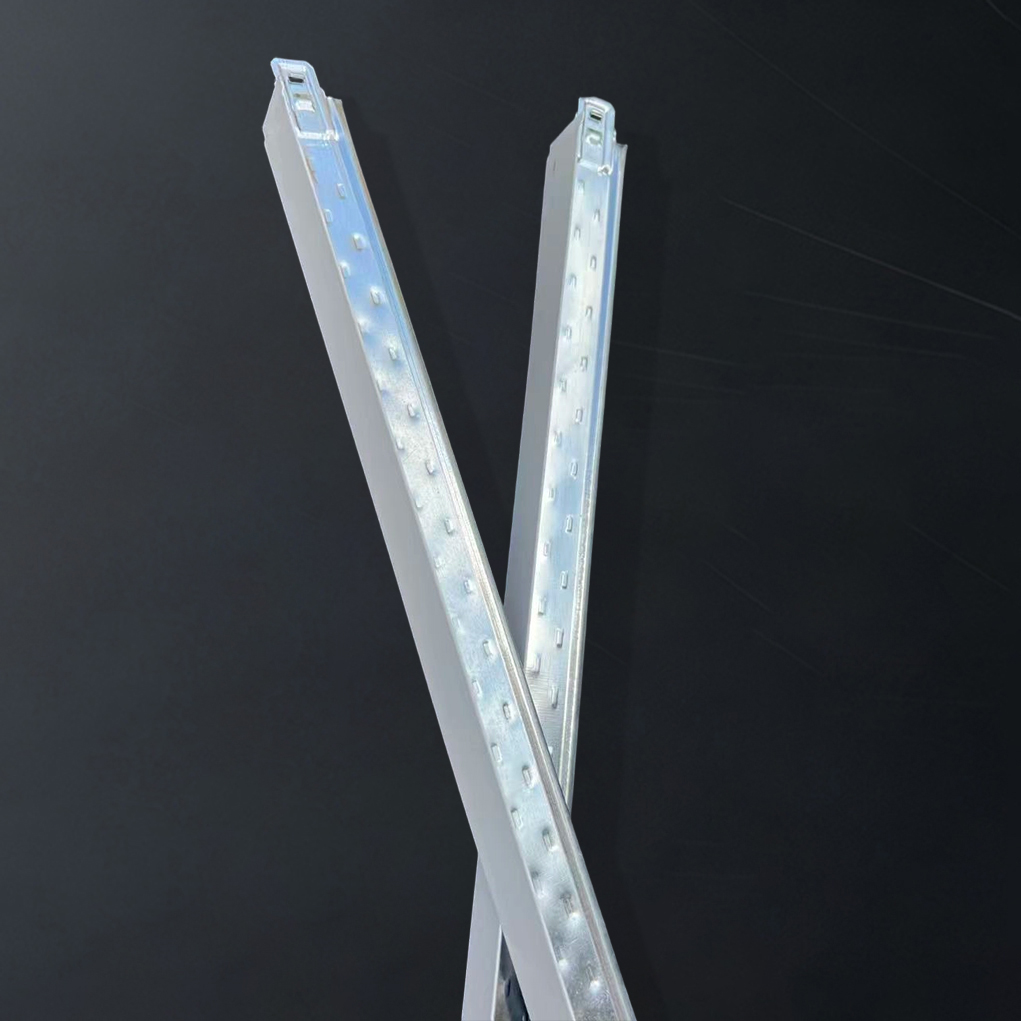
Sustainable ceiling materials are becoming a major focus in modern construction because they help reduce environmental impact, improve indoor air quality, and support long-term building performance. As architects, contractors, designers, and property owners prioritize greener building methods, ceiling systems are increasingly selected not only for appearance and function, but also for eco-friendly sourcing, low embodied carbon, recyclability, and durability.
In commercial, residential, hospitality, education, healthcare, and industrial projects, the ceiling plays an important role in acoustic comfort, thermal efficiency, fire safety, lighting distribution, and maintenance access. Choosing sustainable ceiling materials in construction can support green building goals while still meeting technical requirements for performance and aesthetics.
This guide provides a detailed, SEO-friendly overview of sustainable ceiling materials, including definitions, core benefits, selection criteria, common material types, performance specifications, and practical application guidance. The content below is designed for use in blogs, category pages, industry pages, and educational content hubs.
Sustainable ceiling materials are construction products used in ceiling systems that are designed to reduce environmental impact across their lifecycle. This includes raw material extraction, manufacturing, transportation, installation, use, maintenance, replacement, and end-of-life disposal or recycling.
In simple terms, a ceiling material is considered sustainable when it supports one or more of the following:
Sustainability in ceiling materials is not limited to “green” appearance or natural texture. It is based on measurable attributes such as recycled content, certified wood sourcing, emission levels, maintenance needs, and compatibility with circular construction principles.
The ceiling is often a large surface area in a building, which means the material choice can significantly affect overall sustainability outcomes. A ceiling may contribute to acoustic control, thermal insulation, light reflectance, and interior air quality. Because of this, the ceiling should be treated as a performance component rather than a purely decorative finish.
Key reasons sustainable ceiling materials matter include:
For modern projects, sustainable ceilings are no longer a niche option. They are becoming standard in buildings seeking better environmental performance and occupant comfort.
Sustainable ceiling materials provide a wide range of benefits across environmental, functional, and economic categories. Below is a detailed overview.
| Benefit | Description | Construction Value |
|---|---|---|
| Lower environmental impact | Uses recycled, renewable, or responsibly sourced resources | Reduces embodied carbon and resource consumption |
| Improved indoor air quality | Low-VOC and formaldehyde-reduced products help limit emissions | Supports healthier occupied spaces |
| Acoustic performance | Many sustainable ceiling panels offer sound absorption | Improves comfort in offices, schools, and public buildings |
| Thermal efficiency | Some ceiling systems help retain heat or reduce cooling loads | Supports energy-efficient building operation |
| Durability | Quality sustainable materials can provide long service life | Reduces maintenance and replacement costs |
| Design flexibility | Available in many finishes, textures, and formats | Suitable for modern architecture and interiors |
| Recycling potential | Some materials can be reused or recycled at end-of-life | Supports circular construction methods |
There are several material categories commonly used in sustainable ceiling construction. Each has its own performance strengths, environmental profile, and ideal application areas.
Recycled metal ceiling panels, often made from aluminum or steel with recycled content, are widely used in commercial interiors. They are durable, highly recyclable, and suitable for Suspended Ceiling Systems, open-grid layouts, and modular designs.
Advantages:
Typical uses: offices, airports, transit spaces, retail, healthcare, education, and industrial facilities.
Wood ceilings made from responsibly sourced timber or certified wood products offer a natural look with strong sustainability credentials. When sourced from certified forests and produced with low-emission adhesives or finishes, wood ceilings can support eco-conscious design goals.
Advantages:
Typical uses: hospitality, offices, education, cultural spaces, residential interiors, and high-end commercial projects.
Reclaimed wood is recovered from existing buildings, barns, industrial structures, or other wood sources and reused in new projects. This approach reduces demand for virgin timber and gives the material a second life.
Advantages:
Typical uses: boutique hospitality, restaurants, feature ceilings, residential design, and adaptive reuse projects.
Mineral fiber ceiling tiles are common in Suspended Ceiling Systems and can be produced with recycled content and improved low-emission formulations. They are valued for acoustic performance and affordability, especially in offices and institutional buildings.
Advantages:
Typical uses: offices, schools, healthcare spaces, meeting rooms, and corridors.
Bamboo is a rapidly renewable material often used in slatted ceilings, panels, and decorative ceiling systems. Because bamboo matures quickly, it is widely recognized as a sustainable alternative to slower-growing timber species.
Advantages:
Typical uses: hospitality, retail, cultural spaces, wellness projects, and eco-focused interiors.
Cork is harvested from the bark of cork oak trees without cutting down the tree, making it a highly sustainable material in many applications. Cork ceiling systems can provide natural acoustic absorption and thermal insulation.
Advantages:
Typical uses: residential interiors, wellness centers, studios, offices, and acoustic-focused rooms.
Gypsum ceiling boards are widely used in construction and can be produced using recycled gypsum and paper content. Their performance depends on the formulation, facing material, and installation method.
Advantages:
Typical uses: residential buildings, offices, hotels, healthcare, and commercial interiors.
Some modern ceiling panels are manufactured using plant fibers, agricultural residues, or bio-based binders. These solutions support lower embodied carbon and may offer effective acoustic performance.
Advantages:
Typical uses: offices, educational spaces, coworking environments, and contemporary interior design.
| Material Type | Sustainability Highlights | Main Performance Strengths | Best Fit Applications |
|---|---|---|---|
| Recycled metal panels | High recycled content, fully recyclable | Durability, moisture resistance, easy maintenance | Commercial, healthcare, transit, retail |
| FSC-certified wood | Responsibly sourced renewable material | Aesthetic warmth, acoustic potential | Hospitality, offices, cultural spaces |
| Reclaimed wood | Reuses existing material, reduces waste | Character, uniqueness, low new-resource demand | Feature ceilings, adaptive reuse, boutique interiors |
| Mineral fiber tiles | Can include recycled content | Acoustic absorption, modular installation | Offices, schools, healthcare |
| Bamboo | Rapidly renewable, natural material | Visual appeal, lightweight formats | Eco-focused design, hospitality, retail |
| Cork | Harvested without felling the tree | Acoustic and thermal insulation | Residential, wellness, studios |
| Gypsum boards | Can contain recycled gypsum and paper | Smooth finish, broad availability | General interior ceilings |
| Plant-based panels | Bio-based feedstocks, lower carbon potential | Acoustic comfort, lightweight design | Modern interiors, education, offices |
When selecting ceiling materials for a project, sustainability should be balanced with technical performance. The following specifications are commonly reviewed by designers, engineers, and procurement teams.
| Specification | Why It Matters | Typical Considerations |
|---|---|---|
| Recycled content | Indicates material recovery and reduced virgin resource use | Post-consumer or pre-consumer percentage |
| VOC emissions | Affects indoor air quality | Low-VOC, ultra-low-VOC, or emission-tested products |
| Fire performance | Critical for life safety and code compliance | Flame spread, smoke development, non-combustibility |
| Acoustic rating | Determines sound absorption and noise control | NRC, CAC, or similar acoustic metrics |
| Moisture resistance | Important for bathrooms, kitchens, healthcare, and humid climates | Warping resistance, humidity tolerance, mold resistance |
| Thermal performance | Supports energy efficiency | Insulation value and compatibility with building envelope goals |
| Durability | Extends service life and lowers lifecycle cost | Impact resistance, wear resistance, dimensional stability |
| Maintenance requirements | Affects operational cost and cleaning frequency | Washability, replaceable tiles, access to services above ceiling |
| End-of-life recovery | Supports circular construction | Reusability, recyclability, take-back potential |
Because ceilings serve many different functions, specification data can vary by product type and manufacturer. The table below provides general industry-oriented guidance on common performance ranges and selection priorities. Actual values should always be verified against project requirements and product documentation.
| Performance Category | Common Range or Target | Project Relevance |
|---|---|---|
| Sound absorption | Moderate to high, depending on room function | Important for offices, classrooms, meeting rooms |
| Surface finish | Smooth, textured, slatted, perforated, or natural | Impacts visual style and acoustic behavior |
| Thickness | Varies by system and acoustic target | Affects installation depth and plenum space |
| Module size | Standard panels or custom dimensions | Determines layout efficiency and replacement ease |
| Humidity tolerance | Low to high depending on material | Critical in kitchens, bathrooms, and humid climates |
| Fire rating | Must comply with local building code | Essential for safety approval |
| Light reflectance | Low to high depending on finish color | Influences lighting efficiency and interior brightness |
| Weight | Lightweight to medium | Affects structural loading and installation ease |
In sustainable construction, third-party certifications and environmental documentation help confirm product claims. These indicators are especially useful when evaluating ceiling materials for green building projects.
These certifications do not automatically make a product suitable for every project, but they improve transparency and help teams compare material options more effectively.
Sustainable ceiling materials can contribute to broader environmental objectives in several ways. They may support energy reduction, healthier spaces, better resource efficiency, and lower waste generation over time.
Common contributions include:
In sustainable design, the ceiling should be considered part of an integrated building strategy, working together with lighting, HVAC, acoustics, and interior finishes.
Successful ceiling specification requires a balance between environmental performance and functional requirements. The following best practices can help improve outcomes.
| Project Type | Recommended Material Characteristics | Main Priorities |
|---|---|---|
| Office buildings | Acoustic absorption, low VOC, modular access | Comfort, flexibility, air quality |
| Schools and universities | Durable, acoustic, easy to clean | Noise control, safety, maintenance |
| Healthcare facilities | Hygienic, moisture-resistant, low-emission | Cleanability, compliance, indoor air quality |
| Hospitality spaces | Decorative, acoustic, natural finish options | Aesthetic appeal, comfort, brand experience |
| Residential interiors | Healthy, durable, visually warm | Comfort, design, low emissions |
| Retail environments | Lightweight, visually flexible, easy to maintain | Visual presentation, maintenance |
| Adaptive reuse projects | Reclaimed or recyclable materials | Waste reduction, heritage sensitivity |
Not always. Some sustainable ceiling materials have a higher initial cost, while others are competitively priced. The total lifecycle cost should be considered, including maintenance, durability, replacement frequency, and energy performance.
Yes. Many sustainable ceiling materials are specifically designed for commercial use and can meet acoustic, fire, and durability requirements when properly specified.
Yes. Low-VOC ceiling products and formaldehyde-reduced materials can help improve indoor air quality by reducing emissions into occupied spaces.
Not necessarily. Sustainability depends on sourcing, manufacturing, transportation, durability, maintenance, and end-of-life recovery. A natural material may still have a high environmental impact if it is poorly sourced or short-lived.
Materials with porous structures or acoustic backing, such as mineral fiber, cork, plant-based panels, and engineered wood systems with perforation, often perform well acoustically. The best choice depends on the project’s noise control requirements.
For blog, category, and industry page optimization, the following keyword concepts are naturally relevant to this topic:
Using these phrases naturally in headings, paragraphs, image alt text, and supporting metadata can improve search visibility for relevant construction and interior design queries.
Sustainable ceiling materials in construction play an increasingly important role in modern building design. They offer a practical way to reduce environmental impact while improving indoor air quality, acoustic comfort, energy efficiency, and long-term durability. From recycled metal and FSC-certified wood to cork, bamboo, gypsum boards with recycled content, and plant-based acoustic panels, the market for sustainable ceiling solutions continues to expand.
When selecting a ceiling system, it is important to balance sustainability with technical performance. The best results come from evaluating lifecycle impact, emissions, fire safety, acoustic behavior, moisture resistance, maintenance needs, and end-of-life options. By doing so, project teams can choose ceiling materials that support both high-performance construction and environmental responsibility.
For developers, architects, contractors, and specifiers, sustainable ceilings are not only a design choice but also a strategic construction decision that can enhance building value and support long-term green building goals.
```
This website uses cookies to ensure you get the best experience on our website.



 Phone:
Comment
(0)