

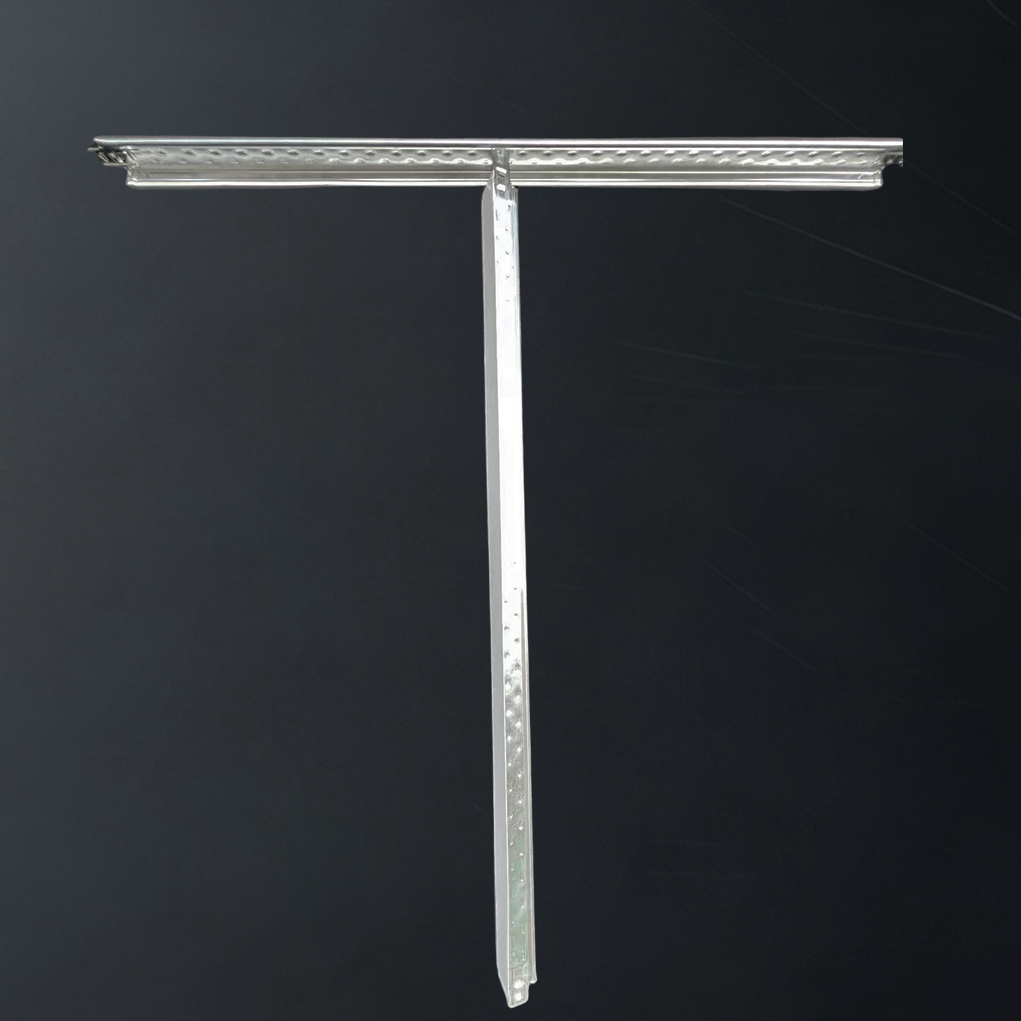
If you are looking for a Ceiling Grid Wholesale Supplier that offers factory price solutions, you are likely comparing product quality, supply capacity, lead time, and long-term cost efficiency. In commercial construction, interior renovation, and large-scale ceiling projects, the Ceiling Grid System is a critical structural component that supports ceiling tiles and helps create a clean, stable, and professional finish. For contractors, distributors, project buyers, and building material importers, sourcing from a wholesale supplier with factory direct pricing can significantly improve project margins and procurement flexibility.
This guide provides a detailed overview of ceiling grid wholesale supply, factory price advantages, common product types, technical specifications, buying considerations, and market-related information. It is written for industry use and is suitable for blogs, category pages, directory pages, and SEO-focused landing pages. The content is fully original, keyword-rich, and structured to support search visibility for terms such as ceiling grid wholesale supplier, Factory Price Ceiling Grid, Ceiling Suspension System, Metal Ceiling Grid, and ceiling grid solutions.
A ceiling grid system is a suspended framework designed to hold ceiling tiles or panels in place. It is commonly used in commercial buildings, offices, hospitals, schools, retail spaces, hotels, and other interior environments where acoustic performance, fire resistance, access to utilities, and aesthetic uniformity are important. The system typically consists of Main Tees, Cross Tees, and Wall Angles, forming a modular support structure that allows easy installation and maintenance.
As a core part of the Suspended Ceiling Structure, the ceiling grid must offer consistent strength, accurate dimensions, corrosion resistance, and reliable locking performance. Poor-quality grid components can cause misalignment, sagging, visible gaps, or long-term structural issues. This is why many buyers prefer working with a ceiling grid wholesale supplier that can provide factory-controlled production, strict quality management, and stable supply.
Factory price solutions refer to pricing offered directly from the manufacturer or production source, with reduced or eliminated middleman markups. For bulk buyers, this model can create several practical benefits:
When a ceiling grid wholesale supplier offers factory price solutions, the buyer may gain not only pricing advantages but also improved order planning, packaging customization, and more predictable supply chain management. This is especially valuable for ongoing construction projects, public tenders, and repeat procurement programs.
Choosing a wholesale supplier for ceiling grid products can deliver significant operational and commercial value. The following are the most important advantages:
Wholesale purchasing reduces per-unit cost, especially for large orders. Buyers can benefit from volume-based pricing and factory-direct offers that support healthy margins and project savings.
Wholesale suppliers are typically equipped to handle consistent production volumes, making them suitable for long-term supply agreements, distributor restocking, and large construction projects.
Factory production helps ensure standardized dimensions, profile accuracy, and compatible components. This is important for installation efficiency and ceiling system performance.
Many suppliers can provide OEM or customized solutions such as different thicknesses, coatings, colors, lengths, packaging formats, and branding options.
Working with a wholesale supplier helps buyers forecast demand, coordinate shipments, and maintain stable inventory for recurring projects or resale channels.
Factory-controlled manufacturing supports uniform product behavior, which helps installers achieve faster assembly and more reliable final results.
Different ceiling projects require different grid formats. A reliable ceiling grid wholesale supplier usually provides a range of product types to suit standard and specialized applications.
| Product Type | Main Function | Typical Application | Key Benefit |
|---|---|---|---|
| Main Tee | Primary load-bearing component of the grid system | Commercial ceilings, large-span systems | Provides structural support and alignment |
| Cross Tee | Connects between main tees to form modular sections | Standard suspended ceilings | Creates panel openings and improves stability |
| Wall Angle | Perimeter support at wall edges | Room edges and border finishing | Supports clean perimeter lines |
| Ceiling Suspension Channel | Structural support in specialized systems | Industrial and custom ceiling structures | Improves load distribution |
| Heavy-Duty Ceiling Grid | Supports higher loads or special ceiling requirements | Facilities with added performance demands | Enhanced durability and strength |
The quality of a ceiling grid system depends heavily on the raw materials and surface treatments used during manufacturing. A professional ceiling grid wholesale supplier often offers the following material options:
Galvanized steel is one of the most common materials for Ceiling Grid Components. It offers strength, corrosion resistance, and long-term dimensional stability. The zinc coating helps protect the surface from moisture and oxidation.
Cold-rolled steel is valued for its smooth surface and accurate forming performance. It is often used when tight tolerances and clean finishing are important.
Aluminum is lighter than steel and may be used in certain ceiling systems where weight reduction is important. It also offers good corrosion resistance in suitable environments.
Common coating options include pre-painted finishes, powder coating, and anti-rust treatments. These coatings improve appearance and protect the grid in different environmental conditions.
Below is a general specification table for common ceiling grid products. Actual values may vary depending on product design, market standards, project requirements, and manufacturing methods.
| Specification Item | Common Range | Description |
|---|---|---|
| Material | Galvanized steel, cold-rolled steel, aluminum alloy | Selected based on strength, weight, and corrosion resistance requirements |
| Thickness | 0.20 mm to 0.50 mm | Depends on load capacity and application requirements |
| Width | Commonly 15 mm, 24 mm, or project-specific | Varies by ceiling tile system and regional standards |
| Length | Standard lengths or customized lengths | Can be adjusted for installation convenience and logistics |
| Surface Finish | Galvanized, powder-coated, pre-painted | Improves appearance and service life |
| Color | White, black, silver, custom colors | Selected to match interior design and ceiling tiles |
| Application | Commercial, residential, institutional, industrial | Suitable for multiple ceiling project types |
| Installation Type | Suspended Ceiling System | Designed for modular assembly and easy maintenance |
Factory price solutions are not based on a single factor. Instead, several elements influence the final wholesale quotation:
For this reason, buyers often request detailed quotations based on product specifications, quantity, destination, and target delivery schedule. A professional ceiling grid wholesale supplier can usually provide a tailored factory price solution that balances cost, performance, and delivery requirements.
Ceiling grid systems are used across a wide range of building environments. Their modular design, accessibility, and visual consistency make them a preferred option in many commercial and institutional projects.
Suspended ceilings are common in offices because they hide wiring, ducts, and pipes while maintaining easy access for maintenance. Ceiling grids help create a tidy, professional workspace.
Retail environments often require attractive, scalable ceiling solutions that support lighting fixtures and HVAC integration. Ceiling grid systems help achieve a clean interior presentation.
Schools use ceiling grids for acoustic performance, utility access, and efficient renovation planning. They are practical for classrooms, corridors, and administrative areas.
Healthcare spaces benefit from easy-access ceilings that support maintenance and cleanliness. In these settings, grid quality and stability are especially important.
Hotels use ceiling systems to balance design, acoustic comfort, and service accessibility. Ceiling grid products are selected to support a polished interior appearance.
Some industrial interiors require suspended grid systems for utility concealment and system access. In these cases, durability and load performance are key factors.
Factory direct supply does more than lower pricing. It also improves the overall procurement experience in several ways:
| Benefit | Why It Matters | Typical Buyer Advantage |
|---|---|---|
| Lower Cost | Reduces intermediary markups | Improves project profitability |
| Stable Quality | Factory control supports consistency | Fewer defects and installation issues |
| Customization | Factory can adjust specifications | Better fit for local market needs |
| Faster Communication | Direct supplier contact simplifies negotiation | Quicker order confirmation and technical support |
| Scalable Supply | Production can support repeat orders | Suitable for distributors and contractors |
When sourcing from a ceiling grid wholesale supplier, careful evaluation helps avoid quality and delivery problems. Consider the following points before placing an order:
Quality is a major concern in ceiling grid procurement. The following indicators are often used to evaluate whether a product meets project expectations:
Accurate profiles and lengths help installers complete work efficiently and reduce waste.
A clean surface finish improves appearance and reduces the risk of visible defects after installation.
Galvanized or coated surfaces are important for extending service life, especially in humid environments.
Tees and connectors must fit securely to maintain stability throughout the ceiling system.
The grid should remain steady under normal ceiling loads without sagging or deformation.
Proper packaging helps prevent scratches, bending, and transport-related damage.
For bulk procurement, packaging and shipping are essential parts of the overall supply solution. A ceiling grid wholesale supplier may use different packaging methods depending on order type and destination:
Shipping methods may include sea freight, air freight, rail transport, or regional trucking. Since ceiling grid systems are often purchased in large quantities, sea freight is commonly used for international bulk shipments due to cost efficiency. Buyers should compare landed cost, not only factory price, when making sourcing decisions.
There is a major difference between purchasing ceiling grid products at wholesale level and buying through retail channels. Wholesale purchasing is generally more suitable for project procurement and distribution businesses.
| Factor | Wholesale Supplier | Retail Channel |
|---|---|---|
| Price | Lower unit cost | Higher unit cost |
| Order Volume | Suitable for bulk procurement | Suitable for small purchases |
| Customization | Often available | Limited or unavailable |
| Supply Stability | Better for repeat orders | Variable stock availability |
| Technical Support | More detailed product support | Usually limited |
The global demand for ceiling grid systems remains stable because suspended ceilings continue to be widely used in commercial and institutional construction. Several trends influence the Ceiling Grid Wholesale Market:
As buyers become more focused on total project value, the importance of a ceiling grid wholesale supplier offering factory price solutions continues to increase. The market favors suppliers that can combine consistent quality, technical flexibility, and competitive pricing.
The main advantage is lower procurement cost. Factory pricing reduces or removes middleman markup, which can significantly improve budget efficiency for large projects.
Ceiling grid systems are widely used for suspended ceilings, especially with modular tiles or panels. However, compatibility should always be checked against the specific ceiling design.
Many wholesale suppliers can offer custom lengths, widths, coatings, and packaging options depending on production capability and order volume.
Galvanized steel is one of the most common materials because it offers a strong balance of durability, corrosion resistance, and cost efficiency.
Quality affects installation speed, visual finish, long-term stability, and safety. Poor-quality grids can create costly problems during and after installation.
When buying Suspended Ceiling Materials in bulk, the ideal supplier should offer more than just low pricing. A dependable ceiling grid wholesale supplier should deliver factory price solutions, stable production, consistent quality, packaging support, and the ability to meet project or distribution requirements. Buyers should evaluate specifications carefully, compare total landed costs, and prioritize suppliers with strong manufacturing standards.
For contractors, builders, importers, and distributors, ceiling grid wholesale sourcing is a practical way to improve project efficiency and profit margins. With the right factory price solution, buyers can secure reliable ceiling suspension components that support modern building needs across offices, schools, hotels, hospitals, retail spaces, and more.
ceiling grid wholesale supplier, factory price ceiling grid, Ceiling Grid Factory direct, Suspended Ceiling Grid, ceiling suspension system, metal ceiling grid, ceiling grid components, ceiling grid wholesale, wholesale Ceiling Grid Supplier, ceiling grid solutions, commercial ceiling grid, Galvanized Ceiling Grid, Ceiling Grid Manufacturer, bulk ceiling grid supply, ceiling grid export, Affordable Ceiling Grid pricing.
This website uses cookies to ensure you get the best experience on our website.



 Phone:
Comment
(0)