

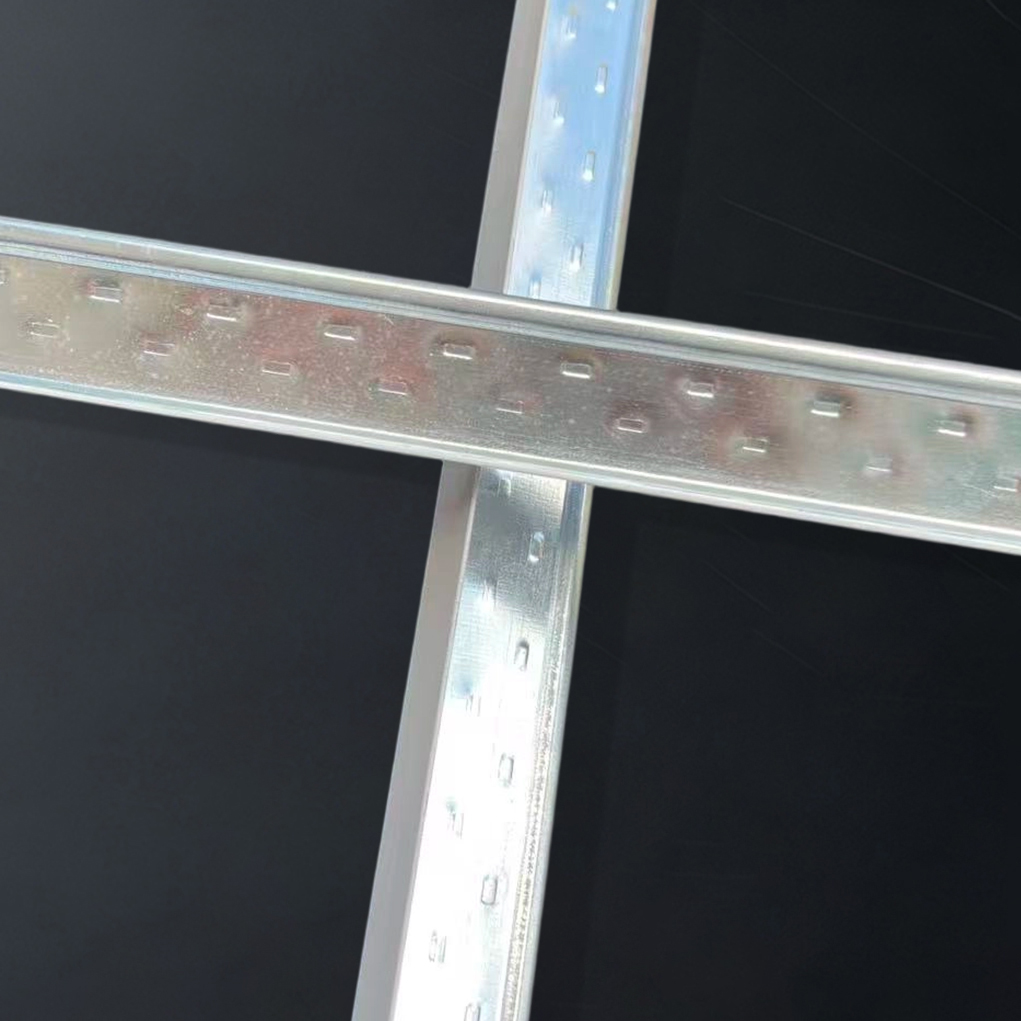
Paint-baked keel installation best practices are essential for achieving durable, stable, and visually consistent
ceiling and partition systems in modern construction. A paint-baked keel is commonly used as the supporting metal
framework for suspended ceilings, wall cladding, decorative panels, and interior dry construction systems. Because
the keel acts as the structural base for the finishing layer, proper installation directly affects load-bearing
performance, leveling accuracy, corrosion resistance, service life, and final appearance.
In commercial buildings, residential projects, hotels, offices, hospitals, shopping centers, and public facilities,
paint-baked keel systems are valued for their clean finish, installation efficiency, and compatibility with many
interior materials. However, the quality of the finished result depends heavily on correct handling, accurate layout,
suitable fasteners, and compliance with installation standards. This guide provides SEO-friendly, industry-general
information on paint-baked keel installation best practices, including definitions, benefits, specifications, common
installation steps, and technical considerations.
A paint-baked keel is a metal structural member used in interior finishing systems, typically coated with a baked
paint layer for improved surface protection, corrosion resistance, and decorative quality. It functions as the
supporting framework beneath ceiling panels, decorative boards, gypsum boards, aluminum panels, or other interior
finishing materials.
The term “keel” in construction generally refers to a framework or skeleton system that carries and distributes loads.
In paint-baked keel applications, the surface finish is usually produced through a controlled coating and baking
process, which helps create a smoother appearance and stronger resistance to environmental wear compared with
untreated metal members.
Proper paint-baked keel installation is important because the keel system supports the visible finish and determines
whether the final surface remains flat, secure, and durable. Poor installation can lead to sagging ceilings,
misaligned panels, visible joints, uneven lighting reflections, noise issues, and premature corrosion or deformation.
For project owners, contractors, and interior system installers, following best practices reduces rework, minimizes
maintenance costs, and helps ensure that the ceiling or wall system performs as intended over time. A well-installed
paint-baked keel system also improves fire safety coordination, access to concealed utilities, and overall project
presentation.
Paint-baked keel systems offer a combination of structural and aesthetic advantages that make them widely used in
interior construction. Their main benefits include:
Paint-baked keel is widely used across interior building systems where both structural support and visual quality are
needed. Common applications include:
Successful paint-baked keel installation depends on several core principles. These principles should be followed on
every project to improve safety, stability, and finish quality.
Before installation begins, all dimensions should be measured carefully. Ceiling height, wall alignment, opening
positions, and service clearances must be confirmed. Accurate marking lines help ensure that the keel system is level
and symmetrical.
The base structure, such as concrete slabs, steel beams, or masonry walls, must be inspected for strength and
suitability. The supporting surface should be firm, dry, and capable of carrying the intended load. Weak or damaged
substrates may require repair before fixing the keel system.
Paint-baked keel should be installed so that load is spread uniformly across the suspension and support points.
Concentrated loads can cause deflection, distortion, or joint cracking in the finishing layer.
Fasteners, anchors, screws, connectors, and hangers must be compatible with both the keel material and the substrate.
Using improper hardware can reduce structural reliability and accelerate corrosion.
During handling and installation, the paint-baked layer should be protected from scratches, impact damage, and
contamination. Surface damage can reduce both appearance and corrosion resistance.
The following table shows common industry-general specification ranges for paint-baked keel systems. Exact dimensions
and performance values vary by project design, local standards, and manufacturing requirements.
| Specification Item | Common Range / Description | Notes |
|---|---|---|
| Material | Galvanized steel, coated steel, or light steel base material | Material selection depends on load and environment |
| Surface Finish | Paint-baked coating, smooth decorative finish | Provides protection and visual consistency |
| Profile Types | Main keel, secondary keel, edge keel, hanger profile | System structure may vary by application |
| Thickness | Approx. 0.4 mm to 1.2 mm | Thickness depends on span and load requirements |
| Width | Approx. 20 mm to 60 mm or project-specific | Different profiles serve different load conditions |
| Length | Standard lengths or customized lengths | Cutting may be required on-site |
| Corrosion Resistance | Enhanced by coating and substrate treatment | Important in humid or interior-service environments |
| Load Capacity | Depends on spacing, profile size, and support method | Must be verified by design calculation |
| Application Environment | Indoor ceilings, partitions, decorative systems | Primarily used in dry interior areas |
The following best practices are widely recommended for paint-baked keel installation in interior construction
projects. These steps help improve structural reliability and finish quality.
Every installation should begin with a review of the project drawings, engineering requirements, and finish material
specifications. The keel system must match the intended use, whether it supports a flat ceiling, multi-level ceiling,
wall cladding, or decorative panel installation.
All paint-baked keel components should be inspected for coating damage, deformation, incorrect dimensions, or
packaging issues. Damaged sections should be separated from acceptable stock to prevent quality problems during
installation.
Keel materials should be stored in a dry, clean, ventilated area. Avoid direct contact with water, soil, or corrosive
substances. Proper storage helps preserve coating quality and prevents bending or warping before installation.
A precise level line is one of the most important factors in paint-baked keel installation. Even small alignment
errors can become obvious after panel installation, especially in reflective or large-area ceiling systems.
Keel spacing should be determined according to the panel weight, span length, structural design, and service load.
Excessive spacing can cause deflection, while overly tight spacing may increase cost without improving performance.
Suspended or anchored keel systems must be attached to stable supporting points. Expansion anchors, bolts, clips, and
hangers should be installed according to the substrate type and load requirements.
Fasteners should be tightened firmly but not excessively. Over-tightening can deform the keel profile, damage the
coating, or weaken the connection.
When field cutting or drilling is needed, the exposed edges should be smooth and clean. Sharp burrs should be removed
to reduce injury risk and improve fit. If required by the project, edge protection or touch-up treatment may be used.
Where keel sections are joined, the connections should be strong, straight, and properly overlapped or connected using
approved accessories. Loose joints can lead to vibration, noise, or long-term deformation.
Ceiling and wall framing often share space with electrical conduits, sprinkler pipes, HVAC ducts, lighting fixtures,
and inspection openings. Coordination with other trades is necessary to avoid clashes and rework.
While details vary by project, the general paint-baked keel installation process usually follows the sequence below.
| Step | Installation Action | Purpose |
|---|---|---|
| 1 | Review drawings and confirm dimensions | Ensures the keel system matches project requirements |
| 2 | Inspect and sort materials | Prevents defective parts from being installed |
| 3 | Mark control lines and reference levels | Establishes accuracy and consistency |
| 4 | Fix perimeter or edge members | Creates the boundary frame for the system |
| 5 | Install hangers or support points | Transfers loads to the structure above |
| 6 | Place main keels | Forms the primary load-bearing framework |
| 7 | Install secondary keels or cross members | Improves panel support and system rigidity |
| 8 | Verify level, spacing, and alignment | Helps maintain a flat, stable finish |
| 9 | Complete surface protection and touch-up | Preserves coating quality |
| 10 | Proceed with board or panel installation | Finalizes the visible interior system |
Even experienced installers can encounter problems if standard procedures are not followed. The most common mistakes
in paint-baked keel installation include:
Paint-baked keel installation should take into account several technical factors that affect long-term performance.
These include environment, load, span, coating condition, and interface compatibility with finishing materials.
The span length between supports influences how much the keel deflects under weight. Longer spans generally require
stronger profiles, closer support spacing, or additional reinforcement. Design calculations should be used to ensure
the selected system is appropriate for the expected load.
Although paint-baked coating improves protection, installation environments with high humidity, condensation, or
airborne chemicals may require additional corrosion control. Interior dry areas are generally best suited for standard
paint-baked keel systems.
Changes in temperature can cause slight movement in metal components and finishing layers. Where necessary, the
installation should allow for expansion gaps or movement allowances to prevent stress buildup.
The keel system must be compatible with the selected ceiling or wall finish. Different boards and panels have
different fixing requirements, weights, and edge conditions. Matching the keel profile to the finish material is
necessary for stable performance.
The table below provides a general comparison between paint-baked keel and other commonly used interior framing
approaches. This comparison is for reference only and does not replace project-specific engineering evaluation.
| Framework Type | Main Advantage | Typical Use | General Notes |
|---|---|---|---|
| Paint-baked keel | Balanced appearance, protection, and installation efficiency | Interior ceilings and wall systems | Popular for decorative and practical applications |
| Bare metal framing | Simple structure and low initial material finish cost | General concealed framing | May require added corrosion protection |
| Aluminum framing | Lightweight and corrosion-resistant | Special interior environments | Often selected for specific aesthetic or environmental needs |
| Wood framing | Easy to cut and modify on site | Some low-load applications | Less suitable for humid or fire-sensitive conditions |
A quality control checklist helps ensure that the paint-baked keel installation meets design expectations. The
following checklist can be used during inspection:
After installation, periodic inspection can help preserve system performance. Routine checks should focus on signs of
loosening, corrosion, coating damage, deformation, or water intrusion. In most interior projects, maintenance needs
are minimal if the system has been installed correctly and the environment remains dry and stable.
If damage is found, repairs should be performed promptly to avoid secondary issues such as panel sagging, joint
opening, or hidden structural stress. Touch-up procedures, replacement of damaged members, or re-fixing of supports
may be necessary depending on the severity of the issue.
For SEO and content structure, the following industry terms are commonly associated with paint-baked keel installation
best practices:
Paint-baked keel installation best practices focus on accuracy, compatibility, surface protection, and structural
stability. Whether used in a suspended ceiling, wall cladding system, or decorative interior framework, the keel
serves as the foundation for the final appearance and long-term performance of the project. By following proper
measurement methods, using suitable fasteners, maintaining correct spacing, protecting the coated surface, and
coordinating with other building trades, installers can achieve high-quality results that support both function and
aesthetics.
For blogs, category pages, industry pages, and SEO-oriented construction content, this topic offers strong search
relevance because it combines practical installation guidance, technical specifications, product benefits, and
application knowledge. A well-written paint-baked keel installation guide can help attract readers looking for
interior framing solutions, ceiling framework standards, and professional installation recommendations.
```
This website uses cookies to ensure you get the best experience on our website.



 Phone:
Comment
(0)