

Below is an original, SEO-friendly, English content block you can directly insert into the middle of an HTML page for a blog, category page, or industry landing page. It includes clear structure, keyword-rich headings, tables, and general industry information only.
---
Ceiling Grid System for Mineral Fiber Board Applications
Introduction to Ceiling Grid Systems for Mineral Fiber Boards
A ceiling grid system for mineral fiber board applications is a Suspended Ceiling Framework designed to support mineral fiber ceiling tiles or boards in commercial, institutional, and residential interior spaces. This Ceiling Suspension System is widely used because it provides structural support, easy access to above-ceiling services, and a clean finished appearance. In modern building interiors, the ceiling grid system plays a critical role in organizing mineral fiber ceiling boards into a stable, level, and visually uniform ceiling plane.
Mineral fiber boards are popular ceiling materials due to their sound absorption, fire resistance, lightweight structure, and cost-effectiveness. However, these boards must be installed on a reliable T-bar ceiling grid or Suspended Ceiling Grid system to ensure proper alignment, load support, and long-term performance. For this reason, architects, contractors, distributors, and project specifiers frequently search for ceiling grid system solutions that are compatible with mineral fiber board applications.
A properly designed ceiling grid system for mineral fiber board offers more than simple support. It contributes to acoustical performance, installation efficiency, maintenance access, and overall visual quality. Whether used in offices, schools, healthcare facilities, retail stores, hotels, or public buildings, the Ceiling Grid Framework helps create a practical and professional ceiling finish.
---
What Is a Ceiling Grid System?
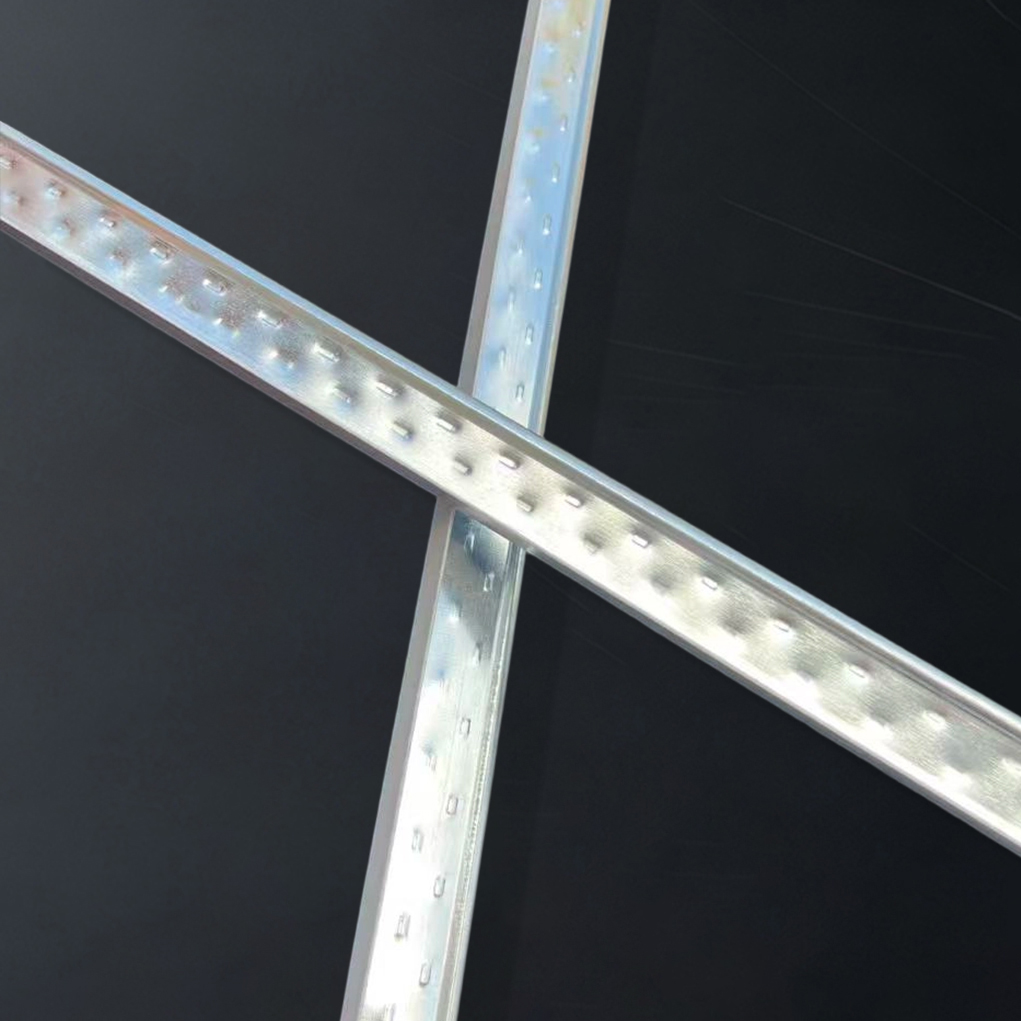
A ceiling grid system is a metal framework suspended from the structural ceiling above. It is designed to hold ceiling panels, tiles, or boards in place. In mineral fiber board applications, the grid system typically consists of:
- Main Runners or Main Tees
- Cross Tees
- Wall Angles or perimeter molding
- Hangers and Suspension Wires
- Connecting clips and accessories
This structure forms a modular ceiling layout, usually in standard square or rectangular modules, such as 600 x 600 mm or 600 x 1200 mm. The grid system must be dimensionally stable, corrosion-resistant, and strong enough to carry the weight of mineral fiber boards without sagging or distortion.
The primary role of the suspended ceiling grid is to create a precise framework that allows fast installation and easy replacement of ceiling boards. This modular system is especially useful where mechanical, electrical, and HVAC systems are hidden above the ceiling but may require periodic access.
---
Why Mineral Fiber Boards Need a Reliable Grid System
Mineral fiber boards are lightweight, but they still require a properly engineered support structure. A poor-quality or incorrectly installed grid can lead to visible problems such as uneven surfaces, board misalignment, joint gaps, vibration, or long-term sagging.
A reliable mineral fiber board ceiling grid system helps solve these issues by providing:
- Accurate module spacing
- Level alignment across the ceiling area
- Secure board support
- Better acoustical performance
- Improved fire and safety compliance
- Faster installation and maintenance
- Clean edge detailing at perimeter zones
Because mineral fiber ceiling boards are used in demanding indoor environments, the ceiling suspension system must also handle temperature fluctuations, humidity changes, and operational vibration. The right ceiling grid system supports the board material while maintaining the intended appearance and performance of the interior ceiling.
---
Key Advantages of Ceiling Grid Systems for Mineral Fiber Board Applications
1. Easy and Fast Installation
One of the greatest advantages of a ceiling grid system is installation speed. Compared with traditional plaster or drywall ceilings, a suspended grid system allows contractors to cover large ceiling areas more efficiently. Mineral fiber boards can be placed directly into the grid openings, reducing labor time and simplifying the installation process.
2. Excellent Acoustic Performance
Mineral fiber boards are widely used for their sound absorption properties. When installed on a properly spaced ceiling grid system, they help reduce noise reflection and improve speech privacy. This makes them especially valuable in classrooms, conference rooms, call centers, and healthcare environments.
3. Fire Safety Support
Many mineral fiber boards are selected because of their fire-resistant properties. The ceiling grid system should complement this by using materials and designs suitable for fire-rated ceiling assemblies where required. Together, the grid and board contribute to a safer interior ceiling solution.
4. Access to Services Above the Ceiling
A suspended ceiling grid system makes it easier to access hidden building systems such as wiring, ductwork, plumbing, sprinklers, and communication lines. Mineral fiber boards can be lifted or removed from the grid as needed, allowing maintenance without damaging the ceiling structure.
5. Visual Consistency
The modular nature of the grid system ensures a uniform and orderly appearance. This is important in professional interiors where ceiling finish quality contributes to the overall design impression.
6. Design Flexibility
Ceiling grids can be configured for different room sizes, ceiling heights, and board dimensions. They can also support lighting fixtures, air diffusers, and service openings, making them a practical choice for flexible interior design.
---
Common Applications of Ceiling Grid Systems for Mineral Fiber Boards
A ceiling grid system for mineral fiber board applications is used across a wide range of projects. Its performance and adaptability make it suitable for both new construction and renovation.
Typical application areas include:
- Office buildings
- Educational facilities
- Hospitals and clinics
- Retail stores
- Hotels and hospitality spaces
- Transportation terminals
- Government buildings
- Libraries and museums
- Residential basements and utility spaces
- Commercial corridors and reception areas
In these environments, the suspended ceiling grid helps create a finished ceiling surface while supporting acoustic control and service accessibility. Mineral fiber boards are especially common where sound management and low maintenance are important.
---
Main Components of a Ceiling Grid System
A ceiling grid system contains several standard components. Understanding each part helps with specification, installation, and maintenance planning.
Table 1: Main Components of a Ceiling Grid System
| Component | Function | Typical Material | Common Use |
|---|---|---|---|
| Main Runner / Main Tee | Primary load-bearing member of the grid | Galvanized steel or coated steel | Supports the full ceiling layout |
| Cross Tee | Connects to main tees and forms module openings | Galvanized steel | Creates tile or board spaces |
| Wall Angle / Perimeter Trim | Supports grid edges at the wall | Steel or aluminum | Provides perimeter finishing |
| Suspension Wire / Hanger | Suspends the grid from the structural ceiling | Steel wire | Maintains ceiling height |
| Connector Clip | Locks grid members together | Steel | Improves stability |
| Seismic Bracing Accessories | Adds support in certain building conditions | Steel and hardware | Enhances structural safety |
| Ceiling Board / Mineral Fiber Board | Visible ceiling surface panel | Mineral fiber | Provides acoustic and aesthetic finish |
Each component must be compatible with the board dimensions and the intended ceiling performance. For high-quality installation, all parts should be accurately manufactured and properly aligned.
---
Standard Specifications for Ceiling Grid Systems
Although specifications can vary depending on project requirements, many ceiling grid systems follow common industrial norms. These norms help ensure easy integration with mineral fiber boards and other standard ceiling materials.
Table 2: Common Ceiling Grid System Specifications
| Specification Item | Typical Range / Value | Notes |
|---|---|---|
| Grid Module Size | 600 x 600 mm, 600 x 1200 mm | Common in metric markets |
| Main Tee Width | 24 mm or similar | Standard visible grid width |
| Grid Material | Galvanized steel | Offers corrosion resistance |
| Surface Finish | White painted, powder coated, or galvanized | Improves appearance and durability |
| Load Capacity | Varies by system design | Must match board weight and accessories |
| Suspension Interval | Based on project design | Depends on ceiling load and layout |
| Fire Performance | Depends on tested system assembly | Must follow local code requirements |
| Acoustic Compatibility | High when matched with mineral fiber boards | Suitable for sound control ceilings |
| Edge Detail | Square edge, tegular, concealed options | Depends on aesthetic and board type |
These values are typical reference points and should be adjusted according to project standards, local building codes, and manufacturer technical data.
---
Types of Ceiling Grid Systems Used with Mineral Fiber Boards
Different projects require different ceiling grid configurations. The following are the most common types used with mineral fiber boards.
1. Exposed T-Grid System
An exposed T-grid system is the most common suspended ceiling framework. The grid members remain visible after installation, forming a neat pattern on the ceiling surface. Mineral fiber boards rest on the grid flanges and are easy to remove for maintenance.
2. Concealed Grid System
A Concealed Ceiling Grid system hides most of the structural framework from view. This creates a more seamless ceiling appearance. It is often used where aesthetics are more important, though installation and access may be slightly more complex.
3. Semi-Concealed Grid System
This design combines visible and hidden elements. It offers a balance between clean appearance and service access. It is suitable for interiors that require visual refinement without losing practicality.
4. Heavy-Duty Ceiling Grid System
A heavy-duty grid is used when the ceiling must support additional loads, larger boards, or integrated services such as lighting and HVAC components. It is engineered for stronger structural performance.
5. Lay-In Ceiling Grid System
This is a standard modular system where mineral fiber boards are laid into the grid openings. It is one of the most common solutions for commercial suspended ceilings because it is economical and easy to maintain.
---
Mineral Fiber Board Characteristics That Affect Grid Selection
When choosing a ceiling grid system, it is important to consider the properties of the mineral fiber boards themselves. These characteristics influence load requirements, module size, and installation details.
Key board characteristics include:
- Board thickness
- Board edge profile
- Board size
- Board weight
- Surface finish
- Acoustic rating
- Fire resistance rating
- Humidity resistance
- Sag resistance
For example, a thicker or denser mineral fiber board may require a stronger grid system or closer suspension spacing. Similarly, tegular edge boards may need a grid profile that creates a recessed appearance, while square-edge boards are usually used with standard exposed T-grid systems.
---
Advantages of Mineral Fiber Board Ceiling Solutions in Building Interiors
Mineral fiber ceiling boards are widely chosen because they deliver a strong balance of performance, cost, and appearance. When supported by a quality ceiling grid system, they provide benefits such as:
- Improved room acoustics
- Reduced noise transmission
- Lightweight ceiling construction
- Easy replacement of damaged panels
- Compatibility with standard lighting and mechanical systems
- Clean and professional ceiling finish
- Cost-effective installation and maintenance
- Good performance in large commercial interiors
These qualities make mineral fiber board ceilings one of the most established choices for suspended ceiling projects.
---
Installation Considerations for Ceiling Grid Systems
Installing a ceiling grid system for mineral fiber board applications requires careful planning and accurate execution. The quality of the final ceiling depends not only on the materials used but also on the installation method.
Important installation factors:
- Accurate ceiling height marking
- Proper perimeter angle fixing
- Correct suspension wire spacing
- Level alignment of main tees
- Secure locking of cross tees
- Correct module dimensions
- Support around light fixtures and service openings
- Safe handling of mineral fiber boards
- Final inspection for flatness and stability
A ceiling grid must be installed to remain level and square. If the framework is uneven, the mineral fiber boards may appear misaligned or may not sit properly in the openings. This is why precision during layout and suspension is essential.
---
Performance Benefits of a Well-Designed Ceiling Grid System
A well-designed ceiling grid system enhances more than just appearance. It improves the performance and functionality of the entire ceiling assembly.
Table 3: Performance Benefits of Ceiling Grid Systems
| Performance Area | Benefit for Mineral Fiber Board Applications |
|---|---|
| Acoustic Control | Helps reduce echo and improve sound comfort |
| Structural Stability | Prevents sagging and board displacement |
| Fire Safety | Supports tested ceiling assemblies |
| Maintenance Access | Allows easy access to above-ceiling systems |
| Aesthetic Quality | Creates a clean and organized ceiling finish |
| Installation Efficiency | Speeds up project completion |
| Flexibility | Supports future changes or board replacement |
| Durability | Resists deformation under normal indoor conditions |
These benefits are particularly important in environments with high occupancy and ongoing facility use.
---
Material and Finish Options for Ceiling Grid Systems
Ceiling grid systems are commonly manufactured from steel because of its strength, consistency, and compatibility with suspended ceiling applications. Depending on the project, surface finishes may vary.
Common options include:
- Galvanized steel
- Pre-painted steel
- Powder-coated steel
- Corrosion-resistant coated steel
The finish not only improves appearance but also helps protect the grid from environmental conditions such as humidity. In buildings where long-term durability is important, a high-quality coating can help maintain ceiling integrity and reduce maintenance concerns.
---
Industry Standards and General Compliance Notes
Ceiling grid systems used with mineral fiber boards should comply with relevant building standards, local codes, and fire safety requirements. While exact standards vary by country and project type, common compliance topics include:
- Load-bearing capacity
- Fire performance of the ceiling assembly
- Corrosion resistance
- Material consistency
- Dimensional tolerances
- Safe installation practices
- Seismic or structural reinforcement where required
It is important to note that the ceiling grid alone does not determine performance. The complete assembly, including the mineral fiber board, suspension method, perimeter detailing, and integrated services, must be considered together.
---
How to Choose the Right Ceiling Grid System
Selecting the right ceiling grid system for mineral fiber board applications depends on several practical factors.
Consider the following:
1. Board dimensions and thickness
Ensure the grid module matches the board size.
2. Expected ceiling load
Account for the weight of boards and any attached accessories.
3. Room environment
Consider humidity, temperature, and corrosion exposure.
4. Fire and acoustic requirements
Match the grid with the desired performance rating.
5. Aesthetic preference
Choose exposed, concealed, or semi-concealed layouts.
6. Maintenance access needs
Decide how often above-ceiling systems must be serviced.
7. Project budget
Balance performance with cost efficiency.
8. Local building codes
Confirm compliance before specification and installation.
By evaluating these factors early, project teams can choose a suspended ceiling grid system that supports both technical and visual goals.
---
Table of Common Applications and Recommended Grid Features
Table 4: Application-Based Grid Selection Guide
| Application | Recommended Grid Feature | Main Benefit |
|---|---|---|
| Offices | Standard exposed T-grid | Easy maintenance and clean appearance |
| Schools | Acoustic-compatible grid | Noise reduction and simple replacement |
| Hospitals | Corrosion-resistant finish | Hygiene and durability |
| Retail Spaces | Modular lay-in system | Quick installation and access |
| Hotels | Concealed or semi-concealed grid | Better visual appeal |
| Corridors | Stable and efficient grid layout | Long-span visual consistency |
| Utility Areas | Heavy-duty grid | Improved support and reliability |
This guide can help buyers, installers, and project planners align the ceiling grid system with the intended building use.
---
Maintenance and Long-Term Service Life
A ceiling grid system for mineral fiber board applications is valued not only for installation efficiency but also for long-term serviceability. Once installed, the system generally requires minimal maintenance, but regular inspections are recommended.
Maintenance best practices:
- Check for damaged or displaced boards
- Inspect grid alignment periodically
- Ensure suspension wires remain secure
- Replace corrosion-damaged parts if needed
- Confirm that service openings remain accessible
- Clean visible grid surfaces when necessary
When properly installed and maintained, a ceiling suspension system can provide reliable service for many years. This makes it a practical investment for commercial and institutional interiors.
---
SEO Keyword Coverage for Ceiling Grid System Topics
For content optimization, this topic naturally supports a wide range of relevant search terms, including:
- ceiling grid system for mineral fiber board
- mineral fiber board ceiling grid
- suspended ceiling grid system
- T-bar ceiling grid
- ceiling suspension system
- mineral fiber ceiling board installation
- lay-in ceiling grid
- Acoustic Ceiling Grid system
- commercial ceiling grid framework
- Modular Ceiling Grid system
These keywords are commonly associated with commercial ceiling products, interior construction, and Acoustic Ceiling Systems. A well-structured page using these terms can improve topical relevance and search visibility.
---
Frequently Used Terminology in the Industry
Below are common terms often used when discussing ceiling grid systems and mineral fiber boards:
- Main tee: The primary load-bearing member of the grid
- Cross tee: The connecting member that forms module openings
- Perimeter angle: The wall support trim around the ceiling edge
- Lay-in board: A panel that sits in the grid opening
- Exposed grid: A grid system visible from below
- Suspended ceiling: A ceiling hung below the structural slab
- Acoustic panel: A ceiling board designed for sound control
- Module size: The repeated panel spacing in the grid layout
Understanding these terms helps with product comparison, specification writing, and technical communication.
---
Conclusion: Why Ceiling Grid Systems Matter in Mineral Fiber Board Applications
A ceiling grid system for mineral fiber board applications is a core part of modern suspended ceiling construction. It provides the structure, support, and flexibility needed to install mineral fiber ceiling boards efficiently and effectively. By combining modular design, acoustic performance, easy maintenance, and visual consistency, the ceiling grid system remains one of the most practical solutions for commercial and institutional interiors.
From offices and schools to hospitals and retail environments, the demand for durable and versatile mineral fiber board ceiling grid systems continues to grow. Choosing the right framework helps ensure stable performance, cleaner installation results, and long-term value. For builders, designers, distributors, and project planners, understanding ceiling grid specifications and applications is essential for delivering successful interior ceiling projects.
Whether the goal is acoustic comfort, fire support, maintenance access, or simply a clean and professional ceiling finish, the suspended ceiling grid system remains a trusted industry standard for mineral fiber board applications.
---
If you want, I can also provide:
1. a more technical version with spec-style language,
2. an HTML-ready version with headings wrapped in `



 Phone:
Comment
(0)