

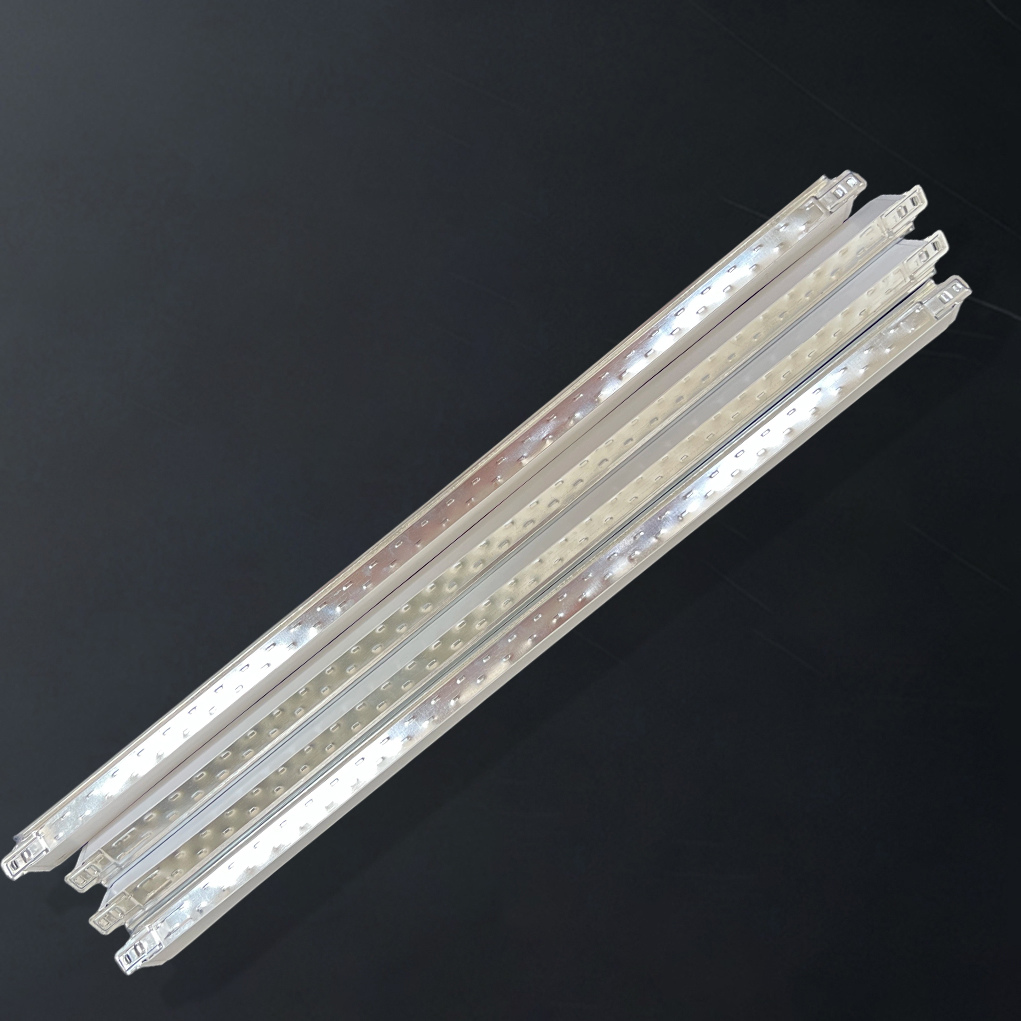
A Professional Ceiling Grid Factory plays a critical role in the modern building materials supply chain by delivering a stable, consistent, and scalable source of Ceiling Suspension Systems for commercial, industrial, institutional, and residential projects. When contractors, distributors, and project developers need reliable access to Ceiling Grid Components, a factory with strong production capacity, standardized quality control, and efficient logistics can make a major difference in project timelines, installation performance, and overall cost control.
In today’s construction market, buyers increasingly look for stable supply, predictable lead times, strict dimensional accuracy, and product compatibility with standard ceiling tile systems. This is why the keyword phrase Professional Ceiling Grid Factory Ensures Stable Supply has become highly relevant in the industry. It reflects not only manufacturing capability, but also the operational strength needed to support long-term procurement, bulk orders, export shipments, and repeat purchasing cycles.
This guide provides original, SEO-friendly, industry-focused information about Ceiling Grid Systems, factory production logic, common specifications, key advantages, quality standards, and purchasing considerations. It is designed for direct use in blogs, category pages, directory pages, and industry landing pages.
A ceiling grid system is a suspended framework used to support ceiling panels, acoustic tiles, mineral fiber boards, gypsum panels, or other ceiling materials. It is typically installed below the structural slab or roof deck and creates a hidden cavity for electrical wiring, HVAC ducts, fire protection piping, and other building services. The grid system is one of the most important components of a suspended ceiling because it determines the stability, alignment, and visual finish of the finished ceiling surface.
Ceiling grid systems are used in offices, hospitals, schools, retail centers, airports, factories, hotels, data centers, and many other buildings. Because these spaces often require fast installation and easy maintenance access, the demand for reliable ceiling grid supply remains strong across global markets.
A professional ceiling grid factory ensures more than just product output. It supports the entire project chain with dependable manufacturing, standardized packaging, and continuous inventory management. For buyers, stable supply is a key advantage because it reduces the risk of delays, shortages, mismatched batches, and installation interruptions.
Stable supply is especially important in large-scale construction or repeat distribution businesses where ceiling grid demand may change quickly. If a supplier cannot maintain consistent production and delivery, project schedules may be affected, labor costs may increase, and installation quality may decline. A professional factory reduces these risks by maintaining raw material procurement, automated production lines, warehousing systems, and quality inspection procedures.
A ceiling grid factory handles the full production cycle from raw material selection to finished packaging. The core functions typically include metal coil processing, rolling and forming, cutting, punching, surface treatment, inspection, bundling, and palletizing. Each step must be controlled precisely to ensure the final ceiling grid meets market requirements.
The most common materials used in ceiling grid production are galvanized steel, pre-painted steel, and sometimes aluminum depending on application needs. High-quality raw material selection helps improve corrosion resistance, structural strength, and long-term performance.
| Factory Function | Main Purpose | Benefit to Buyers |
|---|---|---|
| Raw Material Preparation | Selecting steel coils or aluminum sheets with proper thickness and coating | Improves strength, durability, and consistency |
| Roll Forming | Shaping metal into Main Tee, Cross Tee, and Wall Angle profiles | Ensures accurate dimensions and fast production |
| Cutting and Punching | Creating required lengths and connection holes | Supports easy installation and grid compatibility |
| Surface Treatment | Applying anti-corrosion coating or paint finish | Extends product life in different environments |
| Quality Inspection | Checking size, load performance, finish, and packaging | Reduces defects and installation issues |
| Warehousing and Shipping | Storing inventory and preparing export or domestic delivery | Supports stable supply and faster order fulfillment |
Ceiling grid systems generally consist of several standard components. A professional ceiling grid factory usually manufactures multiple parts so that customers can source a complete system from one production line. This simplifies purchasing and ensures product matching.
| Component | Function | Typical Use |
|---|---|---|
| Main Tee | The primary load-bearing suspension member | Main structural lines in suspended ceilings |
| Cross Tee | Connects between main tees to form the grid pattern | Creates modular ceiling panel spaces |
| Wall Angle | Supports the perimeter and perimeter alignment | Installed along walls or boundary edges |
| Furring Channel | Secondary framing element in some ceiling structures | Used in lightweight framing systems |
| Suspension Wire | Hangs the grid from the structural ceiling | Maintains elevation and support |
| Accessories | Clips, connectors, hangers, and joint parts | Improves installation efficiency |
In construction supply chains, stable product supply is often more valuable than short-term low pricing. A ceiling grid factory that can consistently produce and deliver standard profiles helps distributors maintain inventory levels and enables contractors to complete projects on time. This reliability is a major competitive advantage in both domestic and export markets.
Stable supply also reduces the operational pressure on project managers. Instead of searching for replacement batches or switching brands mid-project, buyers can continue using the same ceiling grid products with confidence. This improves installation uniformity and simplifies maintenance in the future.
A professional ceiling grid factory offers many advantages that support product quality, supply stability, and market competitiveness. These advantages are especially important for wholesale buyers, building material traders, and project contractors who need predictable output and dependable technical standards.
| Advantage | Description | Buyer Benefit |
|---|---|---|
| Standardized Production | Uses fixed dimensions and controlled processes | Ensures product compatibility and easier installation |
| Large Output Capacity | Can handle bulk and repeat orders efficiently | Supports stable supply for distributors and projects |
| Dimensional Accuracy | Maintains precise length, width, and connection geometry | Improves fit, alignment, and ceiling flatness |
| Corrosion Resistance | Uses protective coating or galvanized surfaces | Extends service life in humid or demanding environments |
| Quality Control | Tests materials and finished components before shipping | Reduces defects and claim rates |
| Packaging Efficiency | Bundles products for safe handling and transport | Minimizes damage during delivery |
Ceiling grid specifications may vary depending on market standards, project design, and installation region. However, most professional factories offer a range of common sizes and profile types to meet wide industry demand. The following table provides a general reference for standard ceiling grid specifications.
| Specification Item | Common Range | Notes |
|---|---|---|
| Main Tee Length | 3600 mm / 3660 mm / custom | Depends on market and project layout |
| Cross Tee Length | 600 mm / 1200 mm / custom | Used for modular panel spacing |
| Wall Angle Length | 3000 mm / custom | Supports perimeter installation |
| Profile Width | 15 mm / 24 mm / 38 mm | Depends on visible face design |
| Material Thickness | 0.25 mm - 0.50 mm or more | Selected based on load and project need |
| Surface Finish | Galvanized / pre-painted / powder-coated | Improves appearance and corrosion resistance |
| Color Options | White, black, silver, custom | Matches different ceiling designs |
| Load Type | Light-duty / medium-duty / heavy-duty | Chosen according to ceiling weight requirements |
Stable supply does not happen by chance. A professional ceiling grid factory must manage production planning, raw material inventory, machine capacity, labor scheduling, and shipping coordination. These internal systems work together to keep product flow continuous.
One of the most important elements is raw material procurement. If steel coils or coating materials are not sourced in a stable way, the factory may face production interruptions. Another critical factor is production planning. Factories that forecast demand and manage work orders efficiently can avoid bottlenecks and support on-time order completion.
Storage and logistics are equally important. Finished ceiling grid products should be properly stored in dry, organized warehouses to prevent surface damage and deformation. Organized shipping systems help ensure that goods move quickly from factory to port, warehouse, or project site.
For any buyer searching for a Professional Ceiling Grid Factory Ensures Stable Supply solution, product quality is a critical concern. Quality does not only refer to appearance. It includes strength, fit, coating durability, corrosion resistance, and installation performance. Ceiling grid components must work together as a complete system, so each piece must meet consistent tolerances.
| Quality Factor | What It Means | Importance |
|---|---|---|
| Dimensional Tolerance | How close the product is to target size | Critical for accurate installation |
| Load Performance | Ability to support ceiling materials safely | Important for structural stability |
| Coating Adhesion | How well the surface finish remains attached | Improves long-term durability |
| Straightness | Profile alignment without bending or warping | Ensures flat ceiling appearance |
| Connection Accuracy | How tightly tees and connectors fit together | Prevents loose joints and misalignment |
| Packaging Protection | Resistance to scratches, dents, and deformation during transit | Supports delivery quality |
Ceiling grid systems are widely used because they combine practical utility with efficient installation. A professional ceiling grid factory typically serves multiple industries and building types. This broad market demand helps stabilize long-term production and supply.
While this article does not recommend specific companies, it is useful to know what professional buyers evaluate when sourcing ceiling grid products. A factory that supplies consistent quality and stable delivery usually demonstrates strong manufacturing systems and market experience.
Buyers should assess product range, standard compliance, production capability, sample consistency, packaging quality, and order responsiveness. It is also wise to confirm whether the supplier can support custom dimensions, private label packaging, and repeat supply for long-term projects.
| Buyer Evaluation Point | Why It Matters | Suggested Check |
|---|---|---|
| Production Capacity | Determines ability to fulfill large and urgent orders | Ask for monthly output and line details |
| Sample Consistency | Confirms that mass production matches the sample | Compare sample and bulk measurements |
| Quality Documentation | Shows testing and specification control | Request material and inspection records |
| Packaging Standard | Reduces shipping damage | Review pallet, bundle, and wrapping methods |
| Lead Time Stability | Supports schedule reliability | Check order planning and inventory readiness |
| After-Sales Communication | Helps solve issues quickly after shipment | Evaluate response time and service process |
Sourcing directly from a ceiling grid factory often brings several advantages compared with fragmented trading channels. Direct factory supply can improve price transparency, reduce communication delays, and support more stable replenishment. For B2B buyers, this often means better control over procurement and inventory management.
Direct factory supply can also improve customization opportunities. Buyers may request specific lengths, widths, colors, coatings, packaging labels, or loading requirements. Since the factory controls the production line, it can usually adapt more efficiently than a reseller or small warehouse-based supplier.
Packaging is a major part of stable supply because products must arrive in usable condition. Ceiling grid components are often long, thin metal profiles, which means they need proper bundling, strapping, corner protection, and pallet support. Without strong packaging, even high-quality products can be damaged during transport.
Professional ceiling grid factories usually design packaging based on product type, shipment method, and destination requirements. Export orders may need stronger waterproof wrapping, reinforced palletizing, and container loading optimization. Good packaging reduces complaints, lowers damage rates, and protects the supplier’s reputation.
| Packaging Element | Purpose | Benefit |
|---|---|---|
| Plastic Film | Protects against dust and moisture | Maintains surface condition |
| Steel Straps | Keeps bundles tightly secured | Prevents movement during transport |
| Corner Protection | Protects edges from impact | Reduces dents and deformation |
| Pallet Base | Supports safe lifting and stacking | Improves warehouse handling |
| Labeling | Shows size, quantity, and batch information | Helps sorting and inventory control |
A professional ceiling grid factory has stable production lines, strict quality control, experienced staff, reliable raw material sourcing, and organized logistics. These factors help ensure consistent output and timely delivery.
Stable supply reduces project delays, supports continuous installation, and helps distributors maintain stock for future orders. It is especially important for large-scale projects and repeat procurement.
Yes. Many factories can customize dimensions, colors, thickness, packaging, and surface treatment according to project or market requirements.
The most common materials are galvanized steel, pre-coated steel, and aluminum. The best choice depends on budget, load needs, and environmental conditions.
Buyers can review samples, inspect dimensions, check coating quality, confirm load performance, and assess packaging methods before placing bulk orders.
The phrase Professional Ceiling Grid Factory Ensures Stable Supply describes a manufacturing model built on consistency, capacity, and quality control. In the ceiling industry, stable supply is just as important as product performance because construction schedules, project budgets, and installation results all depend on reliable material flow.
A professional ceiling grid factory supports the market by offering standardized components, dependable output, accurate specifications, and effective packaging. For buyers, these advantages translate into fewer delays, better inventory control, smoother installation, and stronger project outcomes. Whether the need is for wholesale distribution, commercial construction, or export supply, choosing a factory with stable production capability remains one of the most important purchasing decisions.
```
This website uses cookies to ensure you get the best experience on our website.



 Phone:
Comment
(0)