

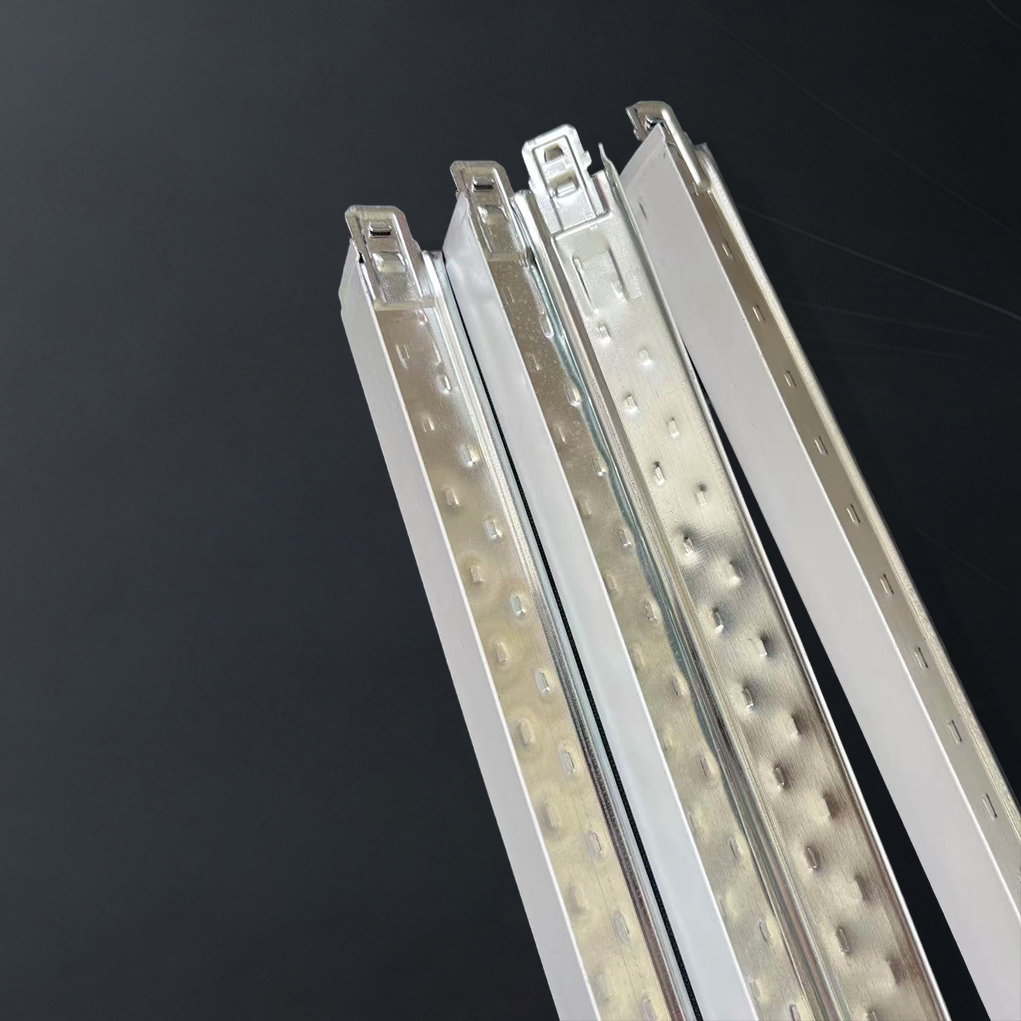
A ceiling grid exporter plays a critical role in the global building materials supply chain by delivering
customized ceiling grid solutions worldwide for commercial, industrial, institutional, and residential projects.
As modern construction standards continue to evolve, buyers increasingly look for export-ready Ceiling Grid Systems
that combine dimensional accuracy, corrosion resistance, easy installation, code compliance, and project-specific customization.
This makes ceiling grid exporters an important source for architects, contractors, distributors, wholesalers, and project developers
seeking reliable Suspended Ceiling Support Systems for international markets.
In today’s competitive construction industry, a ceiling grid exporter is not only a supplier of metal components. It is also a
solutions provider that can support OEM production, private label supply, custom sizes,
special finishes, international packaging, and bulk shipment coordination.
Whether the application is a shopping mall, airport, office tower, hospital, school, hotel, cleanroom, retail space, or industrial
facility, customized ceiling grid systems help ensure structural stability, aesthetic consistency, and efficient ceiling installation.
This industry overview explains what ceiling grid exporters do, what ceiling grid systems are, the key advantages of customized export
solutions, available specifications, common materials and finishes, global quality expectations, and the factors that buyers should
consider when sourcing ceiling grid products from international suppliers.
A ceiling grid is a metal framework used to support suspended ceiling tiles or panels. It is commonly installed below
the structural ceiling to create a clean, accessible, and visually uniform ceiling surface. Ceiling grid systems are typically made
from galvanized steel or aluminum and are designed to carry lightweight ceiling panels while maintaining alignment, load capacity,
and long-term durability.
In commercial construction, ceiling grid systems are widely used because they provide access to overhead mechanical, electrical, and
plumbing services. They also improve acoustics, conceal wiring and ductwork, and allow easy maintenance. For this reason, demand for
high-quality ceiling grid exporter services continues to grow in international building material markets.
| Ceiling Grid Component | Function | Common Material |
|---|---|---|
| Main Tee | Primary structural support member | Galvanized steel, aluminum |
| Cross Tee | Connects main tees and forms grid modules | Galvanized steel, aluminum |
| Wall Angle | Perimeter support and edge finishing | Galvanized steel, aluminum |
| Suspension Wire / Hanger | Supports the ceiling grid from the structure above | Steel wire |
| Ceiling Tile | Visible panel inserted into the grid | Mineral fiber, gypsum, metal, PVC, acoustic board |
A ceiling grid exporter manufactures or sources Ceiling Suspension Systems and supplies them to overseas markets.
The exporter is responsible for managing production standards, export documentation, packaging requirements, logistics, and technical
customization based on buyer specifications.
In the international trade environment, a ceiling grid exporter may support:
Because construction requirements vary from country to country, a ceiling grid exporter must understand different installation systems,
local market preferences, corrosion protection needs, and freight considerations. This is why customized solutions are often more
valuable than standard off-the-shelf products.
The global building sector is highly diverse. A ceiling grid system used in a humid tropical environment may need stronger corrosion
protection than a system installed in a dry climate. Likewise, a project in a high-traffic commercial space may require increased
load-bearing performance, while an architectural interior may prioritize visual precision and clean lines.
Customized ceiling grid solutions give buyers the ability to match product performance with project requirements. A ceiling grid exporter
that offers customization can help reduce installation issues, improve ceiling life span, and support better overall project outcomes.
| Customization Type | Purpose | Typical Buyer Benefit |
|---|---|---|
| Size Customization | Fits different tile dimensions and layout patterns | Improved compatibility and reduced waste |
| Thickness Customization | Adjusts strength and performance level | Better load capacity and durability |
| Finish Customization | Improves appearance and corrosion resistance | Longer service life and cleaner aesthetics |
| Color Customization | Matches project design and branding | More flexible architectural integration |
| Packaging Customization | Supports distribution and retail sales | Easier handling and market-ready presentation |
Choosing a ceiling grid exporter with international supply capability brings multiple advantages to buyers and project managers.
These advantages apply whether the buyer is a wholesaler, importer, contractor, or construction distributor.
Export-oriented suppliers are structured to handle cross-border trade efficiently. They understand shipping documentation, freight
coordination, export packing, and international communication, making it easier to source ceiling grid products for worldwide projects.
A strong ceiling grid exporter can tailor products to meet project-specific dimensions, finishes, and technical requirements. This
flexibility is especially valuable for large-scale or non-standard projects.
Export-grade ceiling grid products are expected to maintain consistent thickness, coating quality, dimension accuracy, and structural
performance. Reliable quality reduces installation delays and minimizes future maintenance issues.
Bulk purchasing through a ceiling grid exporter can improve unit economics. Buyers benefit from optimized manufacturing, packed shipping,
and reduced procurement complexity.
Export suppliers often provide technical data sheets, installation guidance, load information, and product specifications. These details
help buyers make informed sourcing decisions.
Ceiling grid exporters usually supply several system types to match different ceiling applications. The most common product categories
include exposed grid systems, concealed grid systems, and specialty suspension components.
| Ceiling Grid Type | Description | Typical Application |
|---|---|---|
| Exposed Grid | Visible T-bar framework used with lay-in tiles | Offices, schools, retail, hospitals |
| Concealed Grid | Hidden support structure for a seamless appearance | Hotels, premium interiors, architectural spaces |
| Heavy-Duty Grid | Enhanced structural strength for demanding conditions | Industrial areas, large public buildings |
| Corrosion-Resistant Grid | Special finish for moisture-prone environments | Bathrooms, coastal areas, kitchens, humid climates |
| Acoustic-Compatible Grid | Designed for sound-absorbing ceiling panels | Conference rooms, classrooms, theaters |
Material selection is one of the most important factors in ceiling grid production. Exporters typically work with metals that provide
the required balance of strength, weight, corrosion resistance, and cost. The most common materials are galvanized steel and aluminum.
| Material | Main Characteristics | Advantages |
|---|---|---|
| Galvanized Steel | Strong, economical, zinc-coated for rust protection | High load performance, cost-effective, widely used |
| Aluminum | Lightweight, corrosion-resistant, easy to handle | Excellent for humid environments and decorative systems |
| Pre-Painted Steel | Steel with decorative or protective surface coating | Improved appearance and extra surface protection |
| Stainless Steel | High corrosion resistance and premium durability | Suitable for harsh or hygienic environments |
The right material depends on the ceiling system purpose, environmental exposure, required strength, and budget. Export buyers should
compare technical specifications carefully before placing orders.
Ceiling grid exporters usually provide specification sheets that describe product dimensions, thickness, finish, packaging details, and
loading performance. While exact specifications vary by market and project, the following table shows common industry reference points.
| Specification Item | Typical Range / Option | Notes |
|---|---|---|
| Main Tee Width | 15 mm, 24 mm, custom sizes | Depends on ceiling system type |
| Cross Tee Width | 15 mm, 24 mm, matched profile | Should match main tee design |
| Material Thickness | 0.25 mm to 0.8 mm or custom | Higher thickness usually improves strength |
| Length | 1200 mm, 1220 mm, 3000 mm, custom | Selected based on tile layout and market standards |
| Finish | Galvanized, pre-painted, powder-coated | Affects corrosion resistance and visual style |
| Color | White, black, silver, custom colors | Matched to interior design requirements |
| Load Capacity | Light-duty to heavy-duty options | Must suit ceiling panel weight and suspension spacing |
| Packaging | Cartons, bundles, pallets, custom export packing | Important for shipping safety and handling efficiency |
Customized ceiling grid systems are used across many industries and building categories. Their adaptability makes them ideal for both
new construction and renovation projects.
Global buyers search for ceiling grid exporter partners because export-grade products offer both performance and procurement advantages.
The most important benefits include reliability, consistency, and market adaptability.
| Buyer Need | How Export Solutions Help |
|---|---|
| Project consistency | Standardized manufacturing supports uniform installation results |
| Climate adaptation | Custom coatings and material choices improve environmental performance |
| Large-volume supply | Export production can support container-level bulk orders |
| Market flexibility | Different profiles and sizes can be offered for different regions |
| Brand development | Private label and OEM packaging support distributor branding |
| Installation efficiency | Precision dimensions reduce onsite adjustments and labor time |
When sourcing ceiling grid systems internationally, buyers should evaluate several critical factors to ensure quality and supply chain
reliability. The right exporter should be able to deliver both product performance and service stability.
Buyers should also request samples, technical sheets, and product drawings before approving mass production. This helps ensure that the
final ceiling grid products match the project or distribution requirements precisely.
Quality control is essential in ceiling grid production because even small dimensional errors can affect installation accuracy and
ceiling appearance. Export-focused suppliers normally apply multiple inspection steps during production and before shipment.
| Quality Control Item | What It Checks | Why It Matters |
|---|---|---|
| Dimensional Inspection | Length, width, profile accuracy | Ensures compatibility with tiles and accessories |
| Thickness Check | Metal gauge consistency | Supports structural performance |
| Coating Inspection | Finish uniformity and protection level | Improves durability and appearance |
| Load Test | Strength and performance under weight | Helps verify safe use in real projects |
| Packaging Check | Protection during transport | Reduces shipping damage and claims |
For international trade, packaging is just as important as product quality. A ceiling grid exporter must use packaging that protects
the product during long-distance transport, container loading, unloading, and warehousing. Ceiling grid products are usually packed in
bundles, cartons, reinforced pallets, or custom export-ready packaging systems.
Shipping considerations may include moisture protection, anti-scratch wrapping, labeling for easy identification, and palletization for
safer handling. Since ceiling grid systems are often ordered in bulk, packaging must be efficient enough to maximize container space
while still maintaining product safety.
| Packaging Feature | Purpose |
|---|---|
| Wrapped Bundles | Prevents surface damage and keeps profiles organized |
| Carton Boxes | Suitable for smaller accessories and retail supply |
| Wooden or Reinforced Pallets | Improves handling and stacking during export shipping |
| Moisture Barrier Film | Protects against humidity and corrosion during transit |
| Clear Product Labels | Supports inventory control and customs handling |
The international ceiling materials market continues to expand due to urban development, commercial renovation, and increased demand
for modular interior systems. Several trends are shaping the future of the ceiling grid exporter industry.
Buyers often ask ceiling grid exporters for a combination of standard and custom features. These requests vary by region, project type,
and distribution strategy.
| Requested Option | Typical Reason |
|---|---|
| Custom length | Fits non-standard ceiling layouts |
| Black or white finish | Matches interior design themes |
| Extra corrosion protection | Used in humid or coastal environments |
| Heavy-duty profile | Improves load support for demanding applications |
| OEM packaging | Supports distributor branding and resale |
A ceiling grid exporter provides customized solutions worldwide by supplying versatile, durable, and export-ready
suspended ceiling support systems to a wide range of international markets. From standard exposed grids to specialized custom profiles,
these products are essential for modern architectural and construction projects that require reliable ceiling support, easy access to
building services, and attractive interior finishes.
For global buyers, the value of working with an experienced ceiling grid exporter lies in the combination of customization, quality
control, technical support, and international logistics capability. As construction requirements continue to diversify, the demand for
tailored ceiling grid systems will remain strong across commercial, institutional, industrial, and residential applications.
By understanding product types, material choices, specifications, packaging methods, and evaluation criteria, buyers can make more
informed sourcing decisions and build a stronger supply chain for ceiling grid products in worldwide markets.
This website uses cookies to ensure you get the best experience on our website.
 Español
 Pусский
 العربية
 Tiếng Việt



 Phone:
Comment
(0)